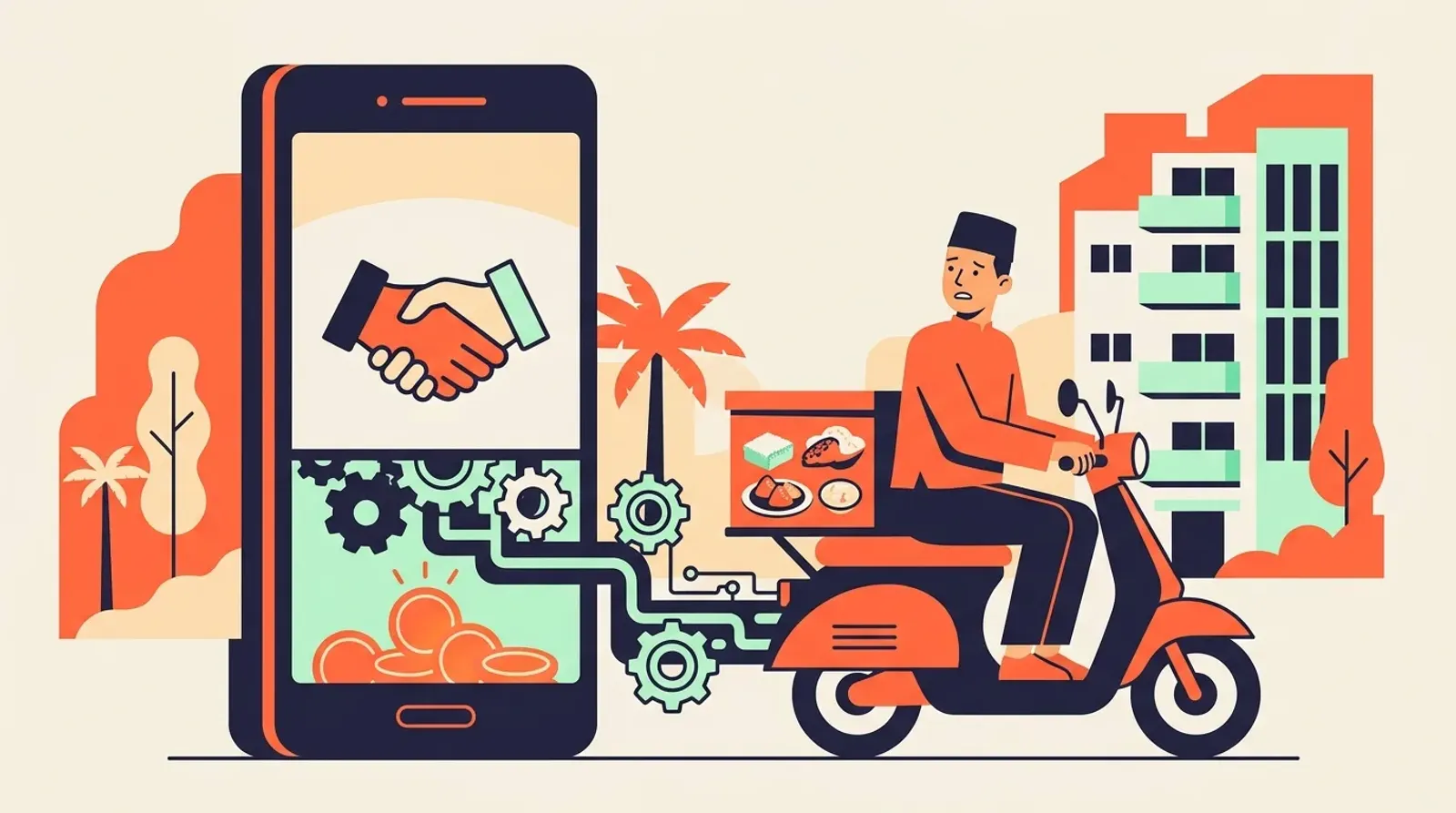
Technology shaped gig work — but most platforms still make you wait for money you already earned. Here's what changed, what didn't, and what fixes it.
Still Waiting to Get Paid? Tech Built This Trap
Technology Promised Gig Workers Freedom — Then Kept the Float
The pitch was simple. Work when you want. Choose your shifts. Be your own boss. Technology was supposed to cut out the middleman and put control back in your hands.
That promise was real — for about five minutes.
The Freedom Was Genuine. The Payment System Was Not.
Flexible scheduling arrived. Transparent shift listings arrived. The ability to pick up work from your phone, in minutes, from anywhere — that arrived too.
But then you finished your shift, went home tired, and waited. Seven days. Sometimes fourteen. On some platforms, longer.
The flexibility was real. The float was built in.
Who Actually Benefits When Payment Is Delayed?
Here is the uncomfortable truth about how most gig platforms were engineered: the technology that moves your labour is fast. The technology that moves your money is deliberately slow.
That gap is not a technical limitation. Payment infrastructure capable of same-day transfers exists. Banks use it. Businesses use it every day.
The delay is a design choice — and it benefits the intermediary, not the worker.
When a platform holds thousands of workers’ earnings for a week or two, that float has value. You did the work. Someone else holds the money. You are not a partner in that system. You are a line item in it.
The Worker Becomes a Number
You have felt this. You pick up a shift, you show up, you deliver. Then you refresh an app waiting to see your own money move. You chase a support ticket. You read a FAQ that explains the policy as if the policy is reasonable.
It is not reasonable. It is a system designed around the intermediary’s cash flow, not yours.
This is the villain at the centre of gig work — not any single company, but a broken model that used the language of freedom while keeping the financial control.
The Tension This Article Resolves
Technology created this problem. Technology can also dismantle it.
The rest of this article traces exactly how gig work got here, what the specific damage looks like for F&B workers in Malaysia, and what it looks like when the infrastructure is built for the worker first — same-day pay, real shifts, no waiting.
You did the work. The money should move when you do.
How Technology Actually Reshaped Gig Work (The Real History)
Short-term work is not a tech invention. Casual labour, day contracts, and shift-by-shift arrangements existed long before smartphones. Dock workers, harvest hands, and banquet staff all understood the deal: show up, work, get paid, move on. The system was imperfect, but it was direct. A supervisor knew your face. Payment happened the same day.
Technology did not create gig work. It scaled it — and in doing so, quietly rewired who holds the power.
The Mobile Shift Changed Everything First
When GPS-enabled smartphones became affordable, something fundamental changed. Workers no longer needed to know a neighbourhood or a contact to find a shift. A phone could match a person to a job three streets away in seconds. That was genuinely useful. Geographic barriers dropped. A skilled bartender in Cheras could pick up a shift in Mont Kiara without knowing anyone there.
Access expanded. That part was real progress.
Then Platforms Replaced the Supervisor
Online platforms removed the human coordinator from the equation. Algorithms took over scheduling, matching, and performance scoring. This created speed and scale that no human dispatcher could match.
But it also created distance. The person doing the work stopped being a name and became a data point. Ratings replaced relationships. Disputes went to a chatbot, not a manager.
Algorithmic Matching Accelerated the Gap
AI-driven job matching made pairing faster and more precise. A platform could now fill dozens of roles simultaneously, across multiple locations, without a single phone call.
The efficiency gains were real. But the design choices behind those algorithms consistently prioritised the platform’s throughput over the worker’s stability. Pay cycles stayed slow. Transparency stayed low. The speed of matching was never matched by speed of payment.
The Pattern Is Clear
Each wave of technology — mobile, platform, algorithm — delivered genuine improvements in access and convenience. Each wave also introduced a new layer between the worker and fair, immediate compensation.
Understanding this history matters. The problem is not technology itself. The problem is the choices made about who technology is designed to serve first. That distinction is exactly where the broken middleman system thrives — and where smarter infrastructure, built with different priorities, can finally close the gap.
The Five Technologies That Built the Modern Gig Economy
The infrastructure for flexible, fast, fairly-paid work has existed for years. Understanding what was built — and how it got misused — is the first step to demanding better.
1. Smartphones and Location-Based Apps
The smartphone put a work terminal in every pocket. GPS and location services meant platforms could match workers to nearby jobs in real time. Work could genuinely find you, not the other way around. That was the promise. The catch: the same location data that surfaces a nearby shift also tracks your every movement, feeding algorithms you have no visibility into.
2. Digital Payment Infrastructure
This is where the betrayal is clearest. Instant payment rails — real-time bank transfers, e-wallet infrastructure — are mature, proven technology. The technical barrier to same-day pay does not exist. Platforms that hold your earnings for days or weeks are making a deliberate business choice, not a technical one. The float benefits them. It costs you.
3. AI-Driven Matching Algorithms
Algorithms can surface the right shift for the right worker faster than any human dispatcher. Relevance and speed improve with every data point. But when the algorithm optimises for platform fill rates rather than worker welfare, it becomes a tool that extracts availability while offering nothing in return — no loyalty, no priority, no memory of your good work.
4. Cloud Platforms and APIs
Cloud infrastructure means a staffing operation no longer needs physical offices in every city. APIs connect scheduling, payroll, and communication systems instantly. This is genuinely powerful — it allows emergency staffing to scale at speed. FlashJobs runs on exactly this kind of infrastructure, which is how operators can fill a no-show in around 90 minutes without a single phone call to a middleman.
5. Blockchain and Smart Contracts
Still emerging in gig work, but the direction is significant. Smart contracts can release payment automatically the moment a shift is verified complete — no approval queues, no accounts payable delay, no human gatekeeping. Transparent, auditable, automatic. The technology removes the excuse entirely.
Every one of these technologies was built to move faster and cut out unnecessary friction. The broken middleman system simply chose to keep the friction — because friction, especially around pay, was profitable. The tools to fix it are not futuristic. They already exist.
What Technology Gave Workers — and What It Quietly Took
The first time you picked up a shift from your phone instead of calling an agent, it felt like progress. No middleman. No waiting for a callback. Just open the app, see what’s nearby, accept, go.
That part was real. Technology did deliver something.
What Actually Got Better
Gig platforms gave workers things the old system never could:
- Proximity-based matching. Work near you, not a 45-minute commute for a four-hour shift.
- More visible shifts. Instead of knowing one or two agents, you could see dozens of openings at once.
- Flexibility on your terms. Accept what fits your schedule. Skip what doesn’t.
- Ratings transparency. Your performance was on record — a way to build a reputation without a CV.
For workers who had been locked out of formal employment, this was genuinely useful. The technology lowered the barrier to entry.
What the Technology Quietly Kept
Then you looked at your payout.
Platforms routinely take a significant cut of what operators pay — and workers often have no clear view of the original rate. The algorithm decides who sees which shifts, who gets surfaced first, and who quietly disappears from the feed. You cannot appeal it. You cannot even see it.
And then there is the float.
Payment held for days or weeks after you have already done the work. This is not a technical limitation. The technology to move money on the same day has existed for years. Holding your earnings is a structural choice — it benefits the platform’s cash position, not yours.
The result: workers are treated as supply to be dispatched, not contributors to be valued.
The Pattern Is the Problem
Every gain came with a corresponding extraction. Flexibility, but opaque control. Visibility, but a cut you never agreed to negotiate. Access to work, but no access to your money until the platform decides.
This is the trap the technology built.
FlashJobs was designed with same-day pay as a non-negotiable. Not a premium feature. Not a future roadmap item. A baseline condition — because you did the work today, and the technology to pay you today already exists.
That is what it looks like when the infrastructure is built for the worker, not around them.
The F&B Gig Worker in Malaysia: A Specific Kind of Broken
F&B shift work is not like other gig work. You cannot do it from a sofa. You cannot batch your tasks or log off when it suits you. A kitchen or a service floor demands your body, your time, and your full attention — and it demands them right now.
That physical reality creates a specific kind of pressure most gig platforms were never designed to handle.
Built for Volume, Not for You
Most staffing platforms optimise for scale. They want thousands of listings, thousands of applicants, and a smooth funnel. Speed is not the point. Matching the right worker to a confirmed shift today — within the hour — is not a metric they are chasing.
So when a restaurant in Bangsar loses two staff on a Friday evening, the platform’s algorithm is doing its best. But its best was designed for next week, not the next ninety minutes.
You Travel Far. You Wait Even Longer.
F&B workers often commute across the city for a single shift. That is time, money, and energy spent before a single plate is cleared. When the pay cycle then stretches days or weeks after the shift, the mismatch becomes painful.
You absorbed the cost upfront — transport, physical effort, time. The platform absorbed your float.
The Gap Between the Promise and the Reality
Technology told F&B gig workers: flexibility, freedom, opportunity. What many experienced instead was:
- Shifts confirmed late, cancelled last minute
- Long commutes for shifts that paid out slowly
- No real visibility into when money would arrive
- Platforms that treated speed-to-fill as their problem, not yours
That gap is not accidental. It reflects what the systems were optimised to do — and who they were optimised to serve.
A Different Kind of Infrastructure
FlashJobs was built specifically for this environment. Emergency F&B shifts, confirmed fast, with same-day pay and work close to where you already are. The two-hour SLA exists because F&B does not wait — and neither should you.
The technology already exists to do this right. The question was always whether someone would build it around the worker’s reality instead of around volume metrics.
For F&B gig workers in Malaysia, that distinction is everything. Visit flashjobsapp.com to see what that looks like in practice.
How FlashJobs Uses Technology Differently — For the Worker, Not the Middleman
The broken middleman system did not fail by accident. It was built to hold the float — collect fees, delay payments, and keep workers dependent on the next booking just to survive the last one. FlashJobs was built to dismantle that structure, one shift at a time.
The Tech Already Exists. The Choice Is What Differs.
Same-day pay is not a technical breakthrough. The payment rails to move money within hours have existed for years. What most platforms lack is the will to use them for workers rather than against them. FlashJobs made same-day pay a design requirement, not a premium feature. You finish a shift, you get paid that day. Full stop.
Shifts Near You, Confirmed Fast
Wasted travel for uncertain work is one of the most punishing costs a gig worker carries — and most platforms treat it as your problem. FlashJobs matches you to shifts nearby, so the commute makes sense before you commit. The same infrastructure that fills an operator’s emergency gap in around 90 minutes also gives you a confirmed booking fast. No waiting. No showing up to find the shift evaporated.
No Lock-In. No Bundles. No Skimming.
You choose which shifts to accept. You set your own availability. There is no algorithm quietly steering you toward low-margin slots to protect someone else’s contract. The direct match model removes the intermediary layer that historically skimmed wages and added friction. What the operator pays reaches you without a middleman taking a cut along the way.
Infrastructure Built for Both Sides
FlashJobs operates as emergency staffing infrastructure — which means the speed and reliability that operators depend on to fill a no-show also protect workers from the chaos of last-minute cancellations and unpaid hours. A 2-hour SLA is not just a promise to the restaurant manager. It is a commitment that your time has value and will not be wasted.
This is what technology in gig work can look like when it is designed for the person doing the work, not the system sitting between you and your pay.
Ready to pick up a shift near you and get paid the same day? Start at flashjobsapp.com.
What Good Gig Technology Actually Looks Like for Workers
The broken middleman system did not fail workers by accident. It was built around a specific assumption: that workers would absorb the cost of uncertainty — waiting for shifts, travelling far for low pay, getting penalised when the platform made an error. Good gig technology starts by rejecting that assumption entirely.
Here is what the standard should actually look like.
Same-Day Pay Is the Baseline, Not the Reward
Holding a worker’s earnings for days or weeks is a design choice, not a technical necessity. The infrastructure to move money on the same day a shift ends already exists. Any platform that frames instant or same-day pay as a premium feature is using payment timing as leverage. Workers who complete a shift have earned that money. The technology should release it immediately.
Proximity Matching That Respects Real Life
A shift two hours away by public transport is not a flexible opportunity — it is an unpaid commute that eats into earnings. Genuine proximity matching means surfacing work that is actually reachable, factoring in how workers in that city move around. For F&B workers in Malaysian cities, this is not a minor convenience. It is the difference between a shift that pays and one that costs.
Full Shift Details Before You Commit
Location. Start time. End time. Pay rate. Role expectations. Workers deserve all of this before they accept a shift — not after, not buried in small print. Transparent shift details are not a feature. They are basic respect. Surprises after acceptance are a symptom of a system designed to fill slots, not support people.
No Penalties for Platform Failures
If a shift is cancelled because the operator changed their mind, or because the platform made a scheduling error, the worker should not be the one who pays for it. Punitive cancellation systems that mark workers down for circumstances outside their control are a structural transfer of risk from the platform to the person least able to absorb it.
FlashJobs is built around these principles. Operators get emergency cover fast — typically filling a no-show in around 90 minutes. Workers get nearby shifts with clear details and same-day pay. The technology serves both sides honestly, not one at the other’s expense.
That is the standard. It should not be rare. Visit flashjobsapp.com to see what it looks like in practice.
The Future of Technological Influence on Gig Work: What Needs to Change
The technology to fix gig work already exists. The problem is who it has been built to serve.
That needs to change. Here is what the next wave of gig technology should actually deliver.
AI Scheduling That Works for Workers, Not Just Operators
Predictive demand tools are already used by large platforms to forecast busy periods. Right now, that intelligence mostly benefits the business side. Flipped toward the worker, the same AI could give you advance notice of high-demand shifts in your area — so you plan your week, not just react to it. That shift in who holds the information changes everything.
Portable Reputation You Actually Own
Today, your ratings live inside someone else’s platform. Switch apps, and you start from zero. A worker-owned credential layer — where your verified experience, reliability score, and skills travel with you across every platform — would end that trap. Your track record should belong to you, not to whoever built the app you happened to use first.
Regulatory Pressure Catching Up to Reality
Policy is moving. Governments are beginning to scrutinise payment delays and worker classification in the gig economy. The technology to pay workers the same day they work has existed for years. Regulation that mandates faster payment timelines simply forces platforms to use what is already built. That is not a technical challenge. It is a design choice waiting for accountability.
Worker-Centric Design as the New Standard
The deepest change is a design philosophy shift. Platform-centric systems optimise for operator convenience and platform revenue. Worker-centric systems optimise for the person doing the work — their time, their pay, their safety, their dignity.
FlashJobs was built from that second position. Workers can find jobs close to where they already are, and businesses pay them directly when each job ends. That is not just a feature list. It is a statement about who the technology is for.
The broken middleman staffing system survives because workers have had no better weapon. Better technology — transparent, portable, fast, and worker-first — is that weapon.
The infrastructure to build it fairly already exists. The only question left is whether the platforms that come next choose to use it that way.
You Did the Work. The Technology to Pay You Today Already Exists.
Here is the truth the broken middleman system does not want you sitting with: the technology to pay you today has existed for years.
Real-time payment rails work. Digital wallets transfer funds in seconds. Shift-matching algorithms can locate nearby work and confirm it in minutes. None of this is new. None of this is difficult. The gap between finishing a shift and seeing money in your account is not a technical problem. It is a choice — made by intermediaries who benefit from holding your float.
The Middleman Built the Delay, Not the Technology
When a platform makes you wait days for pay you already earned, that is not a system limitation. That is a design decision. The same infrastructure that powers instant bank transfers and same-day e-wallet top-ups could be pointed at workers the moment a shift ends. It is not pointed there because the middleman economy was never built around you.
That is the villain in this story. Not technology. Not even the operators who need staff. The broken staffing layer that sits between your labour and your money — and takes its cut by making you wait.
The Solve Already Exists. Use It.
FlashJobs is built on a simple premise: your work is done, your pay should follow. Workers on the platform receive same-day pay. Shifts are nearby. The two-hour SLA means operators fill gaps fast — which means consistent, real work, not a queue you refresh and hope.
This is what emergency staffing infrastructure looks like when it is built for the worker, not the middleman.
If you have a couple of hours to spare, want to increase your income around your area and you are done waiting:
- Find shifts near you at flashjobsapp.com
- Work today
- Get paid today
Your Work. Your Money. Your Day.
The technology exists. The will to use it fairly is what separates platforms that respect workers from those that extract from them. You have already done the hard part — you showed up, you delivered, you earned it.
The only thing left is choosing a system that agrees.
Looking for paid jobs near you? FlashJobs connects you with nearby F&B and hospitality jobs — the business pays you directly and FlashJobs takes no cut. Register early.