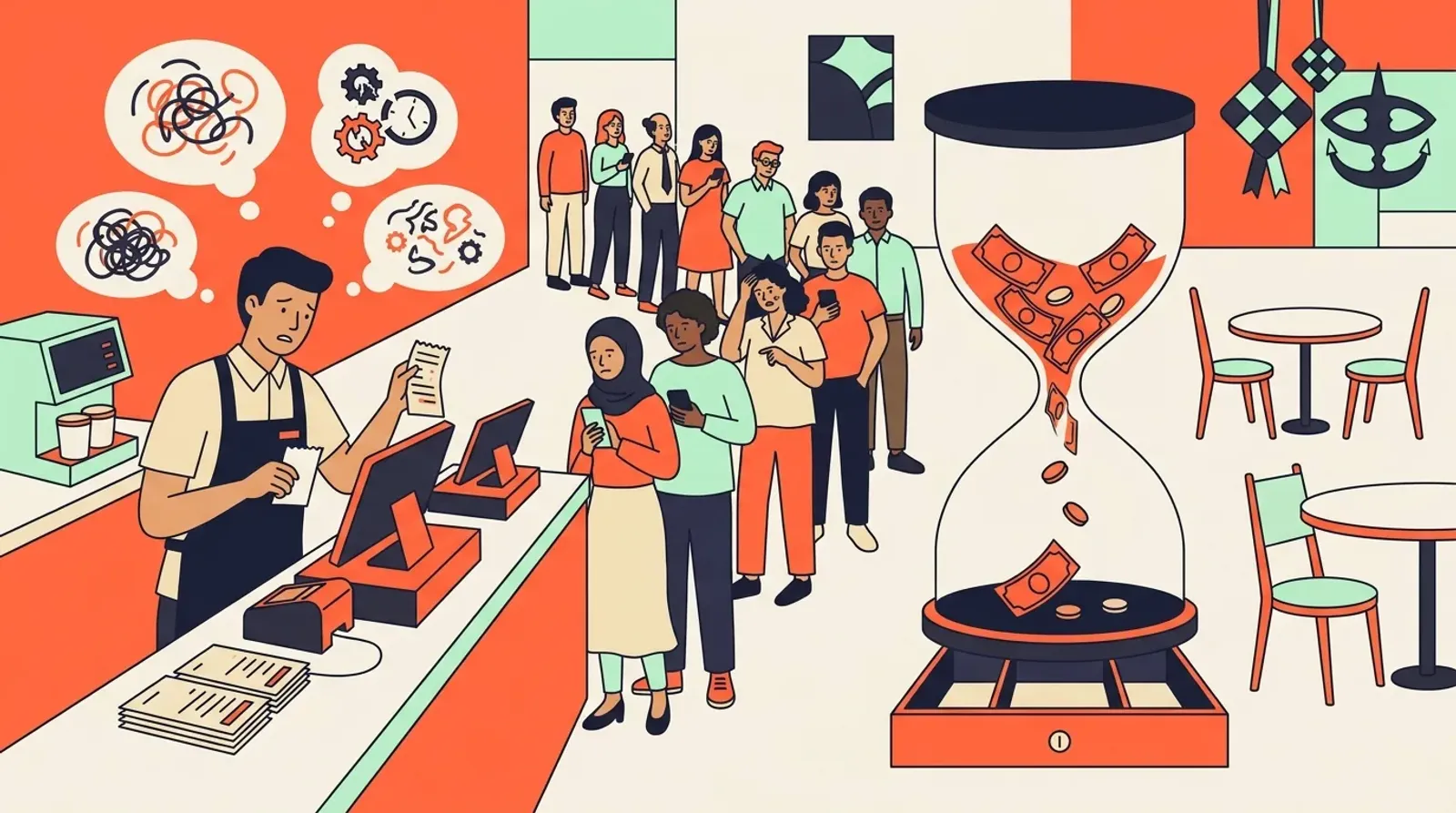
The system makes gig workers wait and wonder. Here's how to build real connections that bring steady gig opportunities — and get paid the same day you work.
Tired of Waiting for Gigs? Network Smarter
The Real Reason Your Gig Pipeline Feels Empty
You refreshed the app. Again. Nothing.
It is not bad luck. It is the system working exactly as it was designed — for the platform, not for you.
The Algorithm Decides, You Wait
Most gig platforms are built around a simple idea: keep workers passive and available. You sit in a queue. The system decides who gets the shift. You get no context, no relationship, no say. When the work dries up, you have no idea why — and no one to call.
That passivity is the real villain here. You have become a number in a pool, not a person with a track record.
Delayed Pay and Opaque Rules Kill Your Momentum
Nothing drains motivation faster than finishing a long shift and then waiting days — sometimes longer — to see your money. Add confusing rules about eligibility, sudden policy changes, and zero transparency, and you stop trusting the system entirely.
When trust breaks down, you stop showing up consistently. When you stop showing up consistently, the algorithm ranks you lower. The cycle punishes you for the platform’s own failures.
Interchangeable Workers Do Not Get Repeat Calls
Operators who rely on traditional staffing channels often receive a different face every single time. They learn not to bother remembering names. Why would they call you back if the system never gave them a reason to notice you in the first place?
This is how good workers get stuck. Not because they lack skill — because the middleman never let the relationship form.
Networking Shifts the Power Back to You
Here is the truth that the broken system does not want you to act on: the gig pipeline you are waiting for is one you can build yourself.
Every shift is a chance to be remembered. Every operator you impress is a potential direct call next Friday night when someone does not show up. Every connection you make moves you out of the anonymous queue and into someone’s mental shortlist.
That is what networking means for gig workers. Not business cards and LinkedIn. Real relationships, built shift by shift, that make you the first call — not the algorithm’s next random pick.
The rest of this guide shows you exactly how to build that pipeline, starting today.
What Networking Actually Means for Gig Workers
Networking sounds like a corporate word. It isn’t. For gig workers, it simply means this: building relationships that bring work directly to you, without waiting for a platform to decide you are ready.
That distinction matters more than most people realise.
Passive vs Active: Know the Difference
Leaving a profile on a platform is passive. It feels like action, but it isn’t. You are sitting in a queue, waiting for an algorithm to notice you. The broken middleman system loves passive workers — they are easy to ignore, easy to replace, and easy to underpay.
Active networking is different. It means a floor manager remembers your name. It means a fellow worker texts you when a shift opens up. It means an operator calls you before they post anything publicly.
One approach makes you dependent. The other makes you indispensable.
Why Gig Networking Moves Faster
Traditional job networking is slow by design — formal introductions, long hiring cycles, structured interviews. Gig networking operates at a completely different speed.
In F&B and service environments, trust is built in hours, not months. A single shift where you show up prepared, communicate clearly, and handle pressure well is worth more than a polished resume. Operators talk to each other. Workers talk to each other. Reputation travels fast in tight-knit industry circles.
This informality is your advantage, not a weakness.
The Compounding Effect Is Real
Here is how it works in practice:
- You perform well on one emergency shift
- The supervisor mentions you to a colleague at another outlet
- That colleague requests you by name the next time they are short-staffed
- You now have two reliable contacts without applying for anything
One good shift can generate three referrals. Those three referrals can generate more. The compounding effect does not happen automatically — it requires you to be intentional — but the foundation is always a single moment of genuine reliability.
The Core Principle
Networking for gig workers is not about collecting contacts. It is about earning trust fast and staying memorable. Every shift is an audition and an opportunity. Platforms like FlashJobs are built around exactly this reality — connecting operators who need someone reliable right now with workers who have already proven they can deliver.
That is where active networking pays off the fastest.
Start Where You Already Are: On-Shift Networking
Every shift you work is a live audition. The floor manager watching you handle a rush, the team lead who sees you stay calm when a table kicks off — these people have the power to call you back before they call anyone else. Most gig workers miss this completely because they clock out and disappear.
Do not disappear.
Make the Last Five Minutes Count
Before you leave any shift, find your supervisor and ask one simple question: “Is there anything I could have done better tonight?” Most workers never do this. That question alone sets you apart. It signals professionalism, and it gives you something useful — real feedback you can act on next time.
While you are there, exchange contact details. Keep it professional: share your number and ask for theirs, or connect on WhatsApp if they offer. A brief, confident handshake and a clear “I would love to come back if you need cover” is all it takes. You are not being pushy. You are making their life easier.
One Good Shift Builds a List
Venue managers quietly keep mental — and sometimes written — lists of reliable people they can call at short notice. One strong performance gets you on that list. Two strong performances keeps you on it. The broken middleman system would have you wait days for a platform to match you with work you could have sourced yourself, from someone who has already seen you perform under pressure.
What “Reliable” Actually Looks Like
- Arrive five minutes early, not on the dot
- Communicate any issues before they become problems
- Finish tasks without being chased
- Leave the space better than you found it
These are small habits. Their compounding effect is not small. A floor manager who trusts you will mention your name to the outlet next door, the sister venue across town, or the event organiser they worked with last weekend.
That is how a single shift becomes a steady pipeline — not through algorithms, but through people who have watched you work and want you back.
Online Communities That Actually Surface Real Gigs
The broken system wants you scrolling endlessly through generic listings that lead nowhere. Smart gig workers go somewhere else entirely — the communities where real operators and experienced workers actually talk.
Here is where to focus your time.
Facebook Groups: Your City, Your Industry
Search for groups combining your city with your role. Think “KL F&B Staff”, “Penang Events Crew”, or “Hospitality Workers Malaysia”. These groups move fast. Operators post urgent needs, workers share shift tips, and regulars build visible reputations over time.
A few habits that work:
- Join three to five focused groups, not twenty broad ones
- Turn on notifications for the busiest groups so you catch urgent posts early
- Comment genuinely on posts before you ever pitch yourself — familiarity builds trust
Subreddits and Discord Servers
Local subreddits for your city often surface honest, unfiltered conversations about which venues are worth working and which are not. Discord servers for service industry workers are smaller but tighter — the signal-to-noise ratio is higher, and active members get remembered.
Look for servers tied to specific niches: events production, hospitality, F&B. Lurk for one week before posting. Understand the culture first.
LinkedIn: Credibility, Not Just Connections
LinkedIn is not just for office workers. A clean profile listing your service roles, certifications, and availability signals professionalism to operators who vet workers before calling them.
What to post: short reflections on a shift well handled, a skill you sharpened, a venue you enjoyed working with. Keep it genuine and specific.
What to skip: vague availability posts, complaints, or anything that reads like a mass broadcast.
The Golden Rule: Contribute Before You Ask
Every community has a radar for people who show up only to extract. Comment on others’ questions. Share a useful tip. Congratulate someone on a placement. Do this consistently for two to three weeks before you make any direct ask.
When you do ask, it lands differently — because people already know your name.
This is where FlashJobs fits naturally into your stack. Emergency shifts posted through flashjobsapp.com connect you to operators who need someone right now — and every shift you complete builds a track record that makes the next opportunity easier to land.
Building a Reputation That Makes Operators Call You First
In the gig world, your reputation is your resume. Operators do not have time to vet strangers when a shift starts in two hours. They call the person they already trust.
That person can be you — but only if you have done the work to become memorable.
Reliability Is the Only Currency That Matters
Three habits separate workers who get called back from workers who get forgotten:
- Show up. Cancelling last-minute is the fastest way to burn a contact permanently.
- Show up on time. Arriving five minutes early signals that you respect the operator’s chaos.
- Show up ready. Correct uniform, tools, attitude — before anyone has to ask.
F&B and events are small industries. Word travels faster than any group chat. One strong shift gets you mentioned in the next briefing. One bad one gets you quietly removed from the shortlist.
How to Ask for Referrals Without the Awkwardness
Most workers never ask. That is the gap you can close.
At the end of a good shift, keep it simple and direct:
“I really enjoyed working here tonight. If you ever need cover again, or know another outlet that does, I would genuinely appreciate the mention.”
That is it. No pitch, no desperation. You are just making it easy for a satisfied operator to help you. Most will respect the confidence.
Keep a Simple Contact Log
Your memory will fail you. A basic log will not.
After every shift, record:
- Who you worked with (supervisor name, outlet manager)
- Where (venue name, area)
- When (date and shift type)
- One note — something specific about that shift or that person
A spreadsheet or even a notes app works fine. When an operator calls three months later, you will remember exactly who they are and what they valued. That detail makes the difference between sounding professional and sounding generic.
Emergency Shifts Build Reputation Faster
Accepting a last-minute shift — the kind no one else wants — is one of the highest-trust signals you can send. Operators remember who answered when things went wrong.
FlashJobs connects workers to urgent nearby shifts through flashjobsapp.com, with same-day pay so reliability costs you nothing. Every emergency shift you nail is a direct investment in your reputation with the operators who need dependable people most.
How Emergency Shifts Open Doors Faster Than Any Job Board
The broken staffing system has a predictable flaw: it fails operators at the worst possible moment. A no-show on a Friday night. A sick call two hours before service. The usual channels — slow agencies, unresponsive group chats — leave operators scrambling alone.
That moment of desperation is your best networking opportunity.
Why Emergency Shifts Create Instant Trust
When a venue is in crisis mode and you walk through the door ready to work, you are not just filling a slot. You are solving a real problem under pressure. Operators remember that. They remember your name, your attitude, and how well you handled the chaos.
No polished CV creates that impression. Showing up does.
FlashJobs is built for exactly this scenario. When an operator has a no-show, the platform matches them with nearby, available workers in around 90 minutes. You get same-day pay — no waiting, no float, no deductions from your wages. The system is designed so you can say yes quickly and get paid the same day you work.
That speed is the point. It puts you in front of grateful operators faster than any passive application ever could.
How to Turn One Emergency Shift Into a Standing Relationship
Filling the gap is step one. Converting it into repeat work takes a little more intention.
- Arrive fully prepared. Bring your own tools if you can — a server with their own wine key, a barista with their own cloth. Small signals say you take the work seriously.
- Ask smart questions during downtime. Learn how the venue operates. Show genuine interest in their setup, not just the shift.
- Before you leave, close the loop. Thank the manager directly and say clearly: “If you ever need someone last-minute again, I want to be your first call.”
- Follow up within 24 hours. A short, professional message through FlashJobs or any contact the operator shares reinforces the impression you made.
Operators who have been let down by the old system are actively looking for reliable people they can trust. One strong emergency shift puts you ahead of candidates they have never met in person.
The broken middleman system creates the crisis. You show up. That is the networking moment that actually changes your pipeline.
Networking Events and Industry Meetups Worth Your Time
Most gig workers skip industry events entirely. That is a mistake. The broken staffing system wins when you stay invisible — when the only people who know your name are the ones who already booked you once. Events fix that.
Which Events Are Actually Worth Attending
Not every event deserves your time. Focus on these:
- F&B and hospitality expos — suppliers, equipment brands, and venue operators all attend. These are decision-makers, not recruiters behind a screen.
- Chamber of Commerce mixers — low-pressure, well-attended, and full of restaurant owners and event managers who hire regularly but rarely post publicly.
- Charity galas and fundraising dinners — event organizers need reliable floor staff and often scout at the events themselves. Showing up as a guest puts you in the room.
- Catering and events industry association nights — smaller crowds, higher trust, faster conversations.
You do not need a ticket to every event. Pick two or three per quarter and show up consistently.
How to Introduce Yourself Properly
Never say “I’m just looking for work.” That positions you as a problem to solve.
Instead, say something like: “I work emergency and event shifts across F&B — I specialise in stepping in fast when operators need cover.”
That one sentence signals reliability, flexibility, and professionalism. It also opens a natural conversation about what the other person actually needs.
Bring a simple contact card. Nothing elaborate — your name, phone number, and what you do. People keep cards. They rarely save a number typed into a phone at a noisy event.
The Follow-Up Step 90% of People Skip
You met someone useful. You had a good conversation. Then you went home and did nothing.
That is where most gig workers lose the opportunity.
Within 48 hours, send a short message. Reference something specific from your conversation — a venue they mentioned, a challenge they raised. Keep it under four sentences. No pitch. Just a reminder that you exist and you pay attention.
Operators remember workers who follow up. It signals the same quality they want on shift: initiative without being asked.
The Bigger Picture
Emergency staffing platforms like FlashJobs get you in the door fast. In-person networking keeps that door open. Use both. The workers who combine real-world reputation with fast-response availability are the ones operators call before they post anything at all.
Protecting Yourself While You Network: Red Flags to Avoid
Networking opens doors. But not every door leads somewhere good. The same broken system that makes gig work frustrating — delayed pay, opaque rules, faceless platforms — can disguise itself as an opportunity. Learn to spot it early.
If Someone Asks You to Pay First, Walk Away
No legitimate gig opportunity requires you to pay for access. Not for a list of contacts. Not for an “exclusive” shift network. Not for a registration fee that unlocks better work. That is a red flag, full stop. Real operators need workers. They do not charge workers to be found.
Verify Pay Terms Before You Commit to a Single Shift
Same-day pay and a 30-day payment cycle are not minor variations — they are completely different financial realities. A platform that floats your wages for weeks is borrowing your money without asking. Before you accept any shift, ask one direct question: when exactly will I be paid? If the answer is vague, that is your answer.
Watch for Middlemen Who Promise Volume but Deliver Friction
Some informal “connectors” promise steady work and position themselves between you and the operator. They take a cut, they control communication, and when something goes wrong, you have no direct relationship to fall back on. The broken system loves a middleman layer. Your goal is to build direct trust with operators — not dependency on a gatekeeper.
Trust Your Gut About How a Platform Treats You
A platform that treats you as a number will never build your reputation. If onboarding feels like a maze, if support is impossible to reach, if the rules change without notice — those are signals. You deserve infrastructure that works for you, not against you.
FlashJobs is built on a simple principle: workers get paid the same day, and the rules are clear before the shift starts. That transparency is not a feature — it is the baseline every gig worker should expect. Visit flashjobsapp.com to see what that looks like in practice.
The Short Version
- Never pay to access work
- Confirm pay terms before every shift
- Avoid middlemen who create dependency
- Choose platforms that treat you as a professional, not a placeholder
Your network is only as strong as the trust inside it. Protect that trust by being selective about who earns it.
Your 30-Day Networking Action Plan
Knowing the right moves is one thing. Doing them consistently is another. This four-week plan gives you a clear sequence so you stop reacting to the broken system — waiting on slow platforms, chasing overdue pay — and start building a pipeline you control.
Week 1: Know What You Are Starting With
Audit your existing contacts and online profiles before you add anything new.
- List every manager, supervisor, or colleague you have worked with in the past year.
- Check your profiles on any professional or community platforms. Are they current? Do they show your actual skills?
- Identify the gaps — who do you wish you had stayed in touch with?
This honest audit is the foundation. You cannot build on what you have not mapped.
Week 2: Show Up and Show Your Standard
Join two local F&B or hospitality online communities this week. Read the conversations. Introduce yourself simply and helpfully.
Then book two shifts and treat each one as a networking event. Arrive early. Communicate clearly. Finish strong. The operators watching you during a shift remember far more than any profile ever tells them.
Week 3: One Follow-Up, Done Properly
Pick one manager or colleague from a recent shift and follow up. A short, direct message works. Thank them for the experience, mention something specific you learned, and express genuine interest in working together again.
One real follow-up beats ten cold connections every time. This is how trust gets built — not through volume, but through consistency.
Week 4: Put Yourself Where Opportunity Moves Fast
Sign up at flashjobsapp.com and accept nearby emergency shifts. Operators using FlashJobs need reliable people immediately — the two-hour SLA means your window to impress is real and urgent. Same-day pay means you are not waiting on a broken system to reward your effort.
Every emergency shift is a live audition. Walk in prepared, perform at your standard, and leave with a name you can follow up with next week.
The Compounding Effect
Four weeks of deliberate action — auditing, engaging, following up, and performing — creates a reputation that travels ahead of you. The gig pipeline that felt empty at the start of the month fills itself when operators already know your name before they post the shift.
Start the audit today. Everything else follows.
Looking for paid jobs near you? FlashJobs connects you with nearby F&B and hospitality jobs — the business pays you directly and FlashJobs takes no cut. Register early.