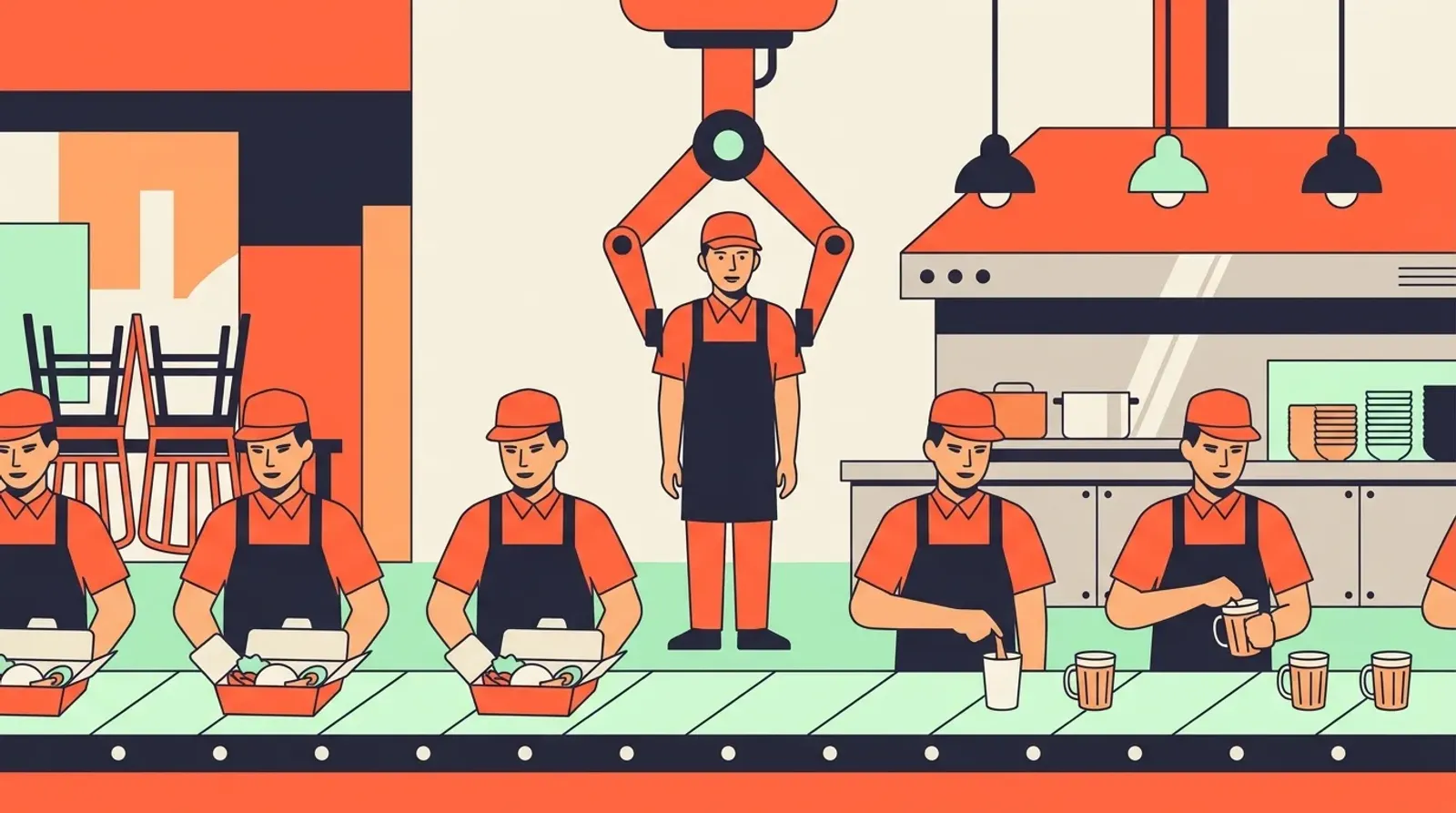
The system skims your wages and buries your profile. Here's how to market yourself as a gig worker, own your value, and get paid same day.
Stop Being Invisible: Market Yourself as a Gig Worker
The System Was Designed to Keep You Replaceable
You have felt it before. You complete a shift, do solid work, and then wait — sometimes days — to see your money. No explanation. No direct line to the operator. Just a platform sitting between you and your pay, skimming its cut and keeping you in the dark.
That is not an accident. It is how the broken middleman system survives.
Traditional staffing platforms are built around volume, not value. When you are one of thousands of anonymous profiles, you have no leverage. You cannot negotiate. You cannot build a reputation that follows you. You are a number filling a slot, and the moment a cheaper number appears, you are out.
How Opacity Keeps You Stuck
The gatekeeping is deliberate. When operators cannot see who you actually are — your reliability, your skills, your track record — they default to whoever the platform pushes to the top. That is usually whoever accepts the lowest rate or the least desirable shift.
Delayed pay makes this worse. When you cannot count on same-day earnings, you lose the freedom to be selective. You take whatever comes, on whatever terms the platform sets. Urgency is a weapon the broken system uses against you.
Self-Marketing Breaks the Cycle
Here is the shift that changes everything: when you market yourself, you stop being a slot and start being a name.
Operators remember workers who show up prepared, communicate clearly, and deliver consistently. That memory is worth more than any algorithm. It means repeat calls, better shifts, and the kind of informal reputation that no platform can suppress or take away.
Self-marketing does not mean building a personal brand for its own sake. It means making your reliability visible — to operators, to coordinators, to anyone who might need someone exactly like you at short notice.
The worker who invests in their own visibility is the one who gets the call when a shift opens at 7 a.m. and needs to be filled by 9 a.m.
That is the dynamic you are here to build. Every section that follows gives you a practical tool to do it.
What ‘Marketing Yourself’ Actually Means for Gig Workers
Forget ads. Forget follower counts. Marketing yourself as a gig worker has nothing to do with either.
It means one thing: being the obvious choice when a shift opens.
When an operator needs someone fast — a no-show at a busy restaurant, a last-minute event understaffed by two — they do not scroll through hundreds of profiles hoping for the best. They reach for the worker they already trust. Marketing yourself is the work you do before that moment arrives, so your name is the one that comes to mind.
Reputation vs Noise
There is a difference between personal branding and self-promotion. Self-promotion is noise — broadcasting how good you are and hoping someone listens. Personal branding is quieter and more powerful. It is the reputation you build through every shift you complete, every operator you leave satisfied, every time you show up on time and ready to work.
One is about being seen. The other is about being remembered.
Gig workers who confuse the two spend energy on the wrong things. The ones who get called back consistently focus on the reputation side — and let the results do the talking.
The Three Pillars
Think of your marketability as resting on three pillars:
- Visibility — Can the right people find you and know what you do? If you are invisible to operators who need your skills, you simply do not exist to them.
- Credibility — Do your profile, reviews, and track record signal that you can be trusted with a real shift under real pressure?
- Reliability — Have you proven, repeatedly, that you show up and perform? This is the pillar that turns a one-time booking into a standing preference.
Why Skipping This Keeps You Stuck
The broken system loves a worker who stays generic. Generic workers get sorted into low-priority queues, offered the least desirable shifts, and paid the minimum the market will bear. The platform holds all the leverage because you have given it nothing to distinguish you.
Workers who invest in these three pillars break that dynamic. They stop competing on price and start competing on trust — which is a much shorter race.
Marketing yourself is not vanity. It is the practical skill that turns gig work from a fallback into a career you control.
Find Your Niche Before You Find Your Audience
“I can do anything” sounds flexible. To the operator reading ten profiles in a hurry, it sounds forgettable.
The gig market is crowded. When you present yourself as a generalist, you give no one a reason to choose you specifically. You become a warm body — and warm bodies are the first to get skipped when something better appears. That is the broken system working exactly as designed: keep workers interchangeable, keep them easy to replace.
The fix is simple. Get specific.
What a Niche Actually Looks Like
A niche is not a job title. It is a skill cluster — a tight combination of what you do well, where you do it best, and who you do it for.
In F&B and events work, strong niches sound like this:
- High-volume banquet service for large hotel events
- Specialty coffee bar and barista work at corporate functions
- Fast-paced casual dining floor service during peak weekend shifts
- Event setup and breakdown crew for exhibition halls
Each of these is specific enough that an operator can picture you on shift before they even call you.
The Three-Shift Exercise
You do not need a career coach to find your niche. You need ten minutes and honest reflection.
Write down three shifts where you genuinely performed well — not just showed up, but left feeling capable and confident. Then ask yourself:
- What type of venue was it?
- What was the pace and pressure level?
- What specific tasks did you handle without being told twice?
Look for the common thread. If all three shifts involved fast table turns in a busy restaurant, that is your signal. If they all centred on coffee preparation and customer conversation, that is your niche. The pattern is already there — you just have to name it.
Why Tight Niches Get Recommended
Operators remember specialists. When a restaurant manager needs a reliable barista for a Saturday morning no-show, they do not think “who can do anything?” They think “who is the person I always call for coffee bar shifts?”
A tight niche makes you easier to remember, easier to recommend, and easier to request again. That is how you stop being invisible — not by doing more, but by being clearly, consistently known for something specific.
Build a Profile That Works While You Sleep
The broken system loves a vague profile. When your information is incomplete, matching algorithms have nothing to work with — so they skip you. You become invisible not because you lack skill, but because the system cannot read you clearly enough to place you.
Fix that. Your profile is your silent sales rep, pitching you to operators and platforms at 2 a.m. while you are resting.
The Four Non-Negotiables
Every profile you own — on any platform — needs these four things working together:
- A clear, recent photo. Operators making fast decisions need to see a professional face. A blurry selfie signals low effort before you have said a word.
- Specific skill tags. “F&B experience” is weak. “Barista, high-volume brunch service, POS systems” is searchable. Be precise.
- Verifiable experience. List actual venues, roles, and durations. Vague claims get deprioritised; concrete history builds trust.
- Availability signals. State when you can work — weekdays, weekends, short-notice shifts. If a platform allows availability settings, keep them current. An outdated status costs you real opportunities.
Update After Every Single Shift
Most gig workers build a profile once and forget it. That is a mistake. Every completed role is a data point that makes you more credible. Add it. A profile that grows with your experience tells any matching system — and any human reviewer — that you are active, reliable, and worth calling first.
Choose Your Platforms Deliberately
LinkedIn is useful for professional credibility, especially if you work across events, hospitality management, or client-facing roles. It signals that you take your career seriously.
For operational roles in food and beverage — floor staff, kitchen support, barista cover — niche platforms built specifically for that environment will always outperform a general job board. They speak the language of shift work, and their matching logic is built around operational fit, not just keyword density.
On FlashJobs, your profile is matched against real, urgent operator needs. Operators filling a no-show need someone deployable within 90 minutes — a complete, specific profile is what gets you that call instead of the person below you on the list.
The Simple Rule
A complete profile is an active one. Treat it like a tool, not a trophy. Keep sharpening it.
Use Social Media to Show Your Work, Not Just Your Resume
The broken system handed you a static profile on a job board and called it a career. A list of past roles and a headshot. That is not proof of anything. It is a placeholder.
Active social media content is different. It shows what you actually do — in real time, in your own voice.
Passive Profiles vs. Active Proof
A LinkedIn profile or a job board listing tells someone you exist. A 30-second clip of you plating a dish cleanly under pressure, or resetting a banquet table in under two minutes, shows someone you can perform. That gap matters enormously to any operator making a fast hiring decision.
Passive profiles wait to be found. Active content goes out and finds people.
Formats That Actually Work
You do not need a production budget. You need a phone and a habit.
- Behind-the-scenes clips — a quick walk through your prep routine or your kit before a shift
- Skill demonstrations — show a specific technique: latte art, mise en place, a proper floor setup
- Short supervisor testimonials — a 15-second voice note or on-camera quote from a shift leader carries more weight than any self-written bio
- End-of-shift reflections — one thing you learned, one problem you solved
Keep each piece short, specific, and grounded in real work.
How the Algorithm Works in Your Favour
Platforms like Instagram and TikTok reward consistent posting within a defined niche. If every piece of content signals “experienced F&B worker who shows up prepared,” the algorithm learns to surface you to exactly the audience you want. This is not virality. It is discoverability built slowly through repetition — which is something the old system never offered you.
Post three times a week in your niche and you will outrank someone with twice your experience who posts nothing.
Your Profile Is a Live Portfolio — Treat It That Way
Every post is a job application. An operator considering you for an emergency shift will search your name. What they find either builds trust or kills it.
Keep personal content on private accounts. Your public-facing profile should reflect the professional you are — reliable, skilled, and ready to work.
That reputation, built post by post, becomes the most durable asset you own.
Reputation Is Your Most Portable Asset
Every platform you join can reset your follower count. Every new operator you approach starts with zero context about you. But your reputation travels with you — and in gig work, it compounds faster than almost anything else you can build.
Word-of-mouth in the F&B and service industry moves quickly. Operators talk. A floor supervisor who trusts you will mention your name to a colleague running a different outlet. That informal signal is worth more than a polished profile photo. It cannot be gamed, and it cannot be copied.
Collect Proof While the Memory Is Fresh
The single most common mistake gig workers make is waiting too long to ask for a reference. After a strong shift, the operator remembers exactly how you performed. Two weeks later, they are managing three other problems and the detail is gone.
Ask before you leave the venue. Keep it simple:
- “Would you be willing to write two or three sentences about working with me today?”
- Request it in writing — a WhatsApp message, an email, or a note on your profile is all you need.
- Save every positive response somewhere permanent, not just in a chat thread you might lose.
Turn Ratings Into Priority Access
Strong, consistent ratings do more than look good. On platforms built for fast deployment, operators under pressure will choose the worker they already trust. A high rating is not vanity — it is a functional tool that moves you closer to the front of the queue when a shift opens up urgently.
This is especially true in emergency staffing situations. When an operator needs to fill a no-show in under two hours, they are not browsing. They are picking fast. Your reputation is the shortcut that gets you chosen.
The Compounding Effect
One good shift earns a reference. That reference earns a second booking. That booking earns another review. Each layer makes the next opportunity easier to land. This is not theory — it is how trust actually accumulates in service industries where operators take a real risk every time they bring in someone new.
Protect that asset. Show up on time. Communicate clearly. Finish the shift professionally. The worker who does this consistently becomes the worker operators request by name — and that is the most durable career advantage in gig work.
Show Up Ready and Get Paid the Same Day — How FlashJobs Changes the Equation
You can build the sharpest profile in the room. You can nail your niche, collect glowing reviews, and show up on time every single shift. But if the platform holding your wages makes you wait 30 days to see your own money, your marketing effort means nothing. The broken system does not just steal opportunities — it steals momentum.
That is the frustration experienced workers know too well. Strong reputation, empty wallet. The delay is not a policy quirk; it is a structural flaw that keeps skilled gig workers financially fragile no matter how well they perform.
Emergency Staffing Infrastructure Built Around You
FlashJobs is not a job board. It is emergency staffing infrastructure for the food and beverage industry in Malaysia — built for the moments when operators need someone now and workers need to earn today.
Here is what that means in practice:
- Nearby shifts. You are matched to urgent operator needs close to where you are, so travel does not eat your earnings.
- Same-day pay. You work the shift, you get paid that day. No invoices, no 30-day cycles, no chasing anyone.
- Fast matching. Operators fill a no-show in approximately 90 minutes. When your profile is strong and your availability is current, you are the one who gets that call.
Your Marketing Becomes Your Competitive Edge
Everything you have built — your niche, your reviewed track record, your professional profile — feeds directly into how well you perform inside FlashJobs. The platform matches workers to urgent operator needs. A complete, credible profile is not decoration; it is the signal that moves you to the front of the queue when a kitchen or front-of-house team needs someone fast.
Strong self-marketing plus same-day pay infrastructure is a combination the broken system cannot offer. You stop performing for a platform that treats you as disposable. You start earning on your own terms, shift by shift, with your wages arriving the same day you work for them.
That is not a promise. That is the operational model.
Ready to stop waiting? Visit flashjobsapp.com and put your marketing to work where it actually pays off.
Consistency Beats Virality Every Time
Here is the trap the broken system sets for you: it makes you feel invisible, so you chase one big moment to fix everything. One perfect profile. One viral post. One lucky break that finally puts you on the radar.
That is not how it works.
The gig workers who build lasting, reliable income do not go viral. They show up — week after week — and let small actions compound into something the system cannot ignore.
The Myth of the Perfect Launch
No single profile update will transform your bookings overnight. No one post will make operators suddenly flood your inbox. Chasing that moment wastes energy you could spend building real momentum.
The workers who consistently get called first are not the most talented. They are the most present. Their profiles are current. Their track record is visible. Their reputation keeps growing quietly in the background.
Build a Simple Weekly Habit
You do not need hours. You need a rhythm. Try this each week:
- One profile update — refresh a skill, add a recent role, or sharpen your headline
- One piece of proof content — a short post, a photo from a shift, a note about something you learned on the job
- One new connection — reach out to an operator, a fellow worker, or someone in your industry
That is it. Three small actions. Done consistently, they build a profile that actively works for you even when you are not looking at your phone.
Treat Self-Marketing as Infrastructure
The workers who thrive long-term think about self-marketing the way a business thinks about its tools. Not a one-time task. Not a campaign. Infrastructure — something you maintain so it keeps delivering.
Every shift you complete, every piece of feedback you accept, every profile update you make is a deposit. The account grows slowly, then noticeably, then significantly.
Platforms that treat you as disposable are counting on you to stay invisible. Consistency is how you refuse that deal.
If you want an environment that rewards showing up reliably — where your track record matters and same-day pay reflects your real effort — FlashJobs is built for exactly that kind of worker.
Start small. Start this week. Keep going.
Your Action Plan: Start Marketing Yourself This Week
The broken system will not send you a reminder. No platform will build your reputation for you. No middleman will fight for your visibility. That work is yours — and it starts now.
Here is your checklist. Work through it in order.
Step 1: Lock In Your Niche
- Pick one or two roles you do best — bartender, line cook, event crew, barista.
- Write one clear sentence that describes what you do and who you do it for.
- Stop saying yes to everything. Specificity makes you memorable.
Step 2: Build a Profile That Represents You
- Use a clean, professional photo. Smile. Look like someone a manager wants on shift.
- List your real skills, certifications, and equipment you can operate.
- Keep your contact details current. A great profile with a dead number is invisible.
Step 3: Collect Social Proof
- After every shift, ask for a short written endorsement or a five-star rating.
- Screenshot positive feedback and save it. You will need it.
- One genuine testimonial from a real operator is worth more than ten self-written claims.
Step 4: Choose Platforms That Work for You
- Ask one question before joining anything: does this platform pay me the same day?
- If the answer is no, factor that delay into your decision. Your time and your labour have value.
- Platforms built around emergency staffing — like FlashJobs — are designed so operators fill urgent gaps fast and workers get paid the same day. That is the infrastructure a serious gig worker deserves.
You Are Not a Number
The old system treated gig workers as interchangeable. Show up, clock out, wait for pay, repeat. That model only works if you stay invisible.
A gig worker with a sharp niche, a strong profile, verified social proof, and same-day pay infrastructure is a different proposition entirely. Operators notice reliability. Repeat bookings follow. Your reputation compounds.
Own your marketing. Choose platforms that respect your time. Show up ready.
The system that made you replaceable cannot survive a worker who refuses to be replaced.
Looking for paid jobs near you? FlashJobs connects you with nearby F&B and hospitality jobs — the business pays you directly and FlashJobs takes no cut. Register early.