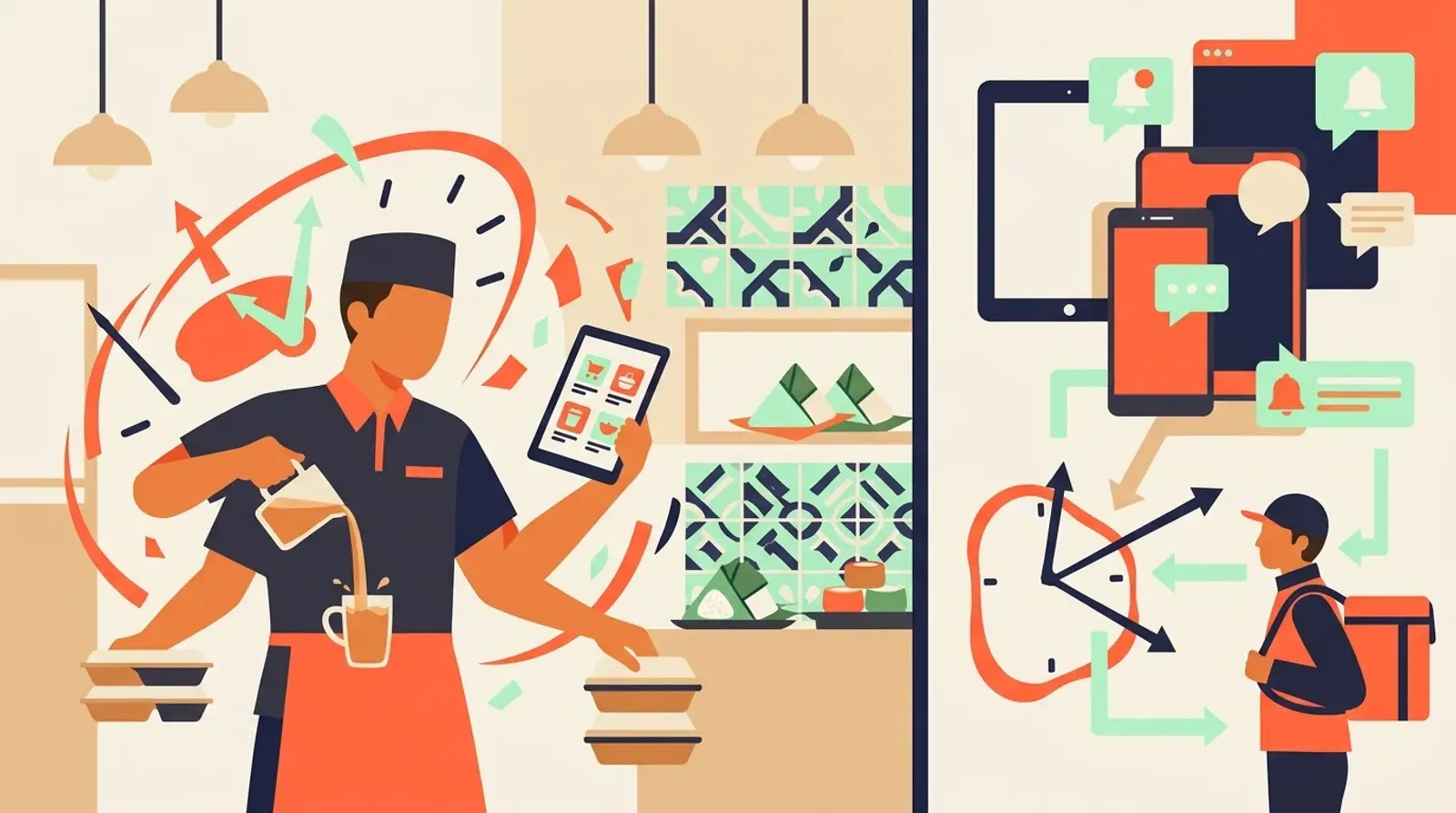
Stop letting platforms control your schedule and your pay. Practical time management for gig workers who want more shifts, more money, and their life back.
Time Management for Gig Workers Who Are Done Waiting
The Real Reason Your Time Feels Stolen
You set your alarm. You show up. You work the shift. Then you wait.
You wait for payment to clear. You wait for a confirmation that never comes. You wait to find out if tomorrow’s shift is still happening. That waiting is not a minor inconvenience — it is where your time actually goes.
Most time management guides for gig workers focus on calendars, apps, and morning routines. They treat your schedule like a blank canvas. But if you have spent any real time working gigs in food and beverage or hospitality, you know the canvas is never blank. It is already filled in by someone else’s system — and that system was not built around you.
The Hidden Time Thief
The broken middleman model has a specific shape. It confirms shifts late. It pays slowly. It gives you rules that change without notice. Every one of those friction points costs you time you cannot bill for — time spent chasing, checking, and second-guessing.
That dead time between “I think I have a shift” and “I know I have a shift” is where your week falls apart. It stops you from booking a second gig, making a plan, or simply resting properly. Uncertainty is expensive, and the old system runs on it.
You Are Not Bad at Time Management
If your schedule feels chaotic, the problem is not your discipline. The problem is that you are trying to manage your time inside a system designed to keep you reactive.
Workers who take back control do not just use better apps. They make structural changes — choosing platforms that confirm fast, pay the same day, and put shifts close to where they already are. Tools like FlashJobs are built on that logic: operators fill a no-show in around 90 minutes, and workers get paid the same day they work.
That kind of infrastructure does not just help your wallet. It gives you your time back.
What This Guide Is Actually About
The sections ahead are not about squeezing more productivity out of a broken system. They are about identifying where the system steals your time — and building a working life that stops letting it.
You are the hero of this story. The broken system is the enemy. Let’s take your time back.
Know Your Time Before You Manage It
Most gig workers try to manage their time before they understand it. That is like budgeting money you have never counted. Spend one week tracking first. Then manage.
Run a Simple One-Week Audit
You do not need a spreadsheet. Open your phone’s notes app or download a free tracker like Toggl Track — it takes thirty seconds to start a timer. Log four categories:
- Earning hours — you are on-site and getting paid
- Travel time — commuting to and from a shift
- Waiting time — confirmed but not yet placed, or sitting between gigs
- Admin time — checking apps, replying to messages, chasing payment confirmations
Do this honestly for seven days. The gap between earning hours and everything else is usually the shock that changes how you work.
Find Your Peak Windows
After a week of data, patterns emerge. Certain days, times, and areas produce consistent work. Others are dead zones where you burn energy for nothing. Mark them clearly. Your peak windows are the hours the market actually wants you — protect them. Your dead zones are where the broken system wastes your time with false promise.
Separate What You Control From What You Do Not
This is the most important distinction in gig time management. You do not control when a platform processes a payout. You do not control how long a confirmation takes. You do not control shift cancellations made by someone else.
You do control which platforms you commit to, which shifts you accept, and how you position yourself geographically before a busy window opens.
Only manage what you own. Stop spending mental energy on the rest.
Why This Matters for Emergency Shifts
If you work in food and beverage or hospitality, knowing your peak windows lets you be available when operators need urgent cover most. Platforms like FlashJobs are built around that urgency — operators fill gaps fast, and workers who are already positioned nearby get first access to same-day paid shifts. Your audit tells you exactly when and where to be ready.
Track the week. Read the data. Then build the schedule — not before.
Build a Weekly Schedule That Works Around You, Not Them
The broken system wants you to stay permanently on call — available at all hours, ready to drop everything, perpetually waiting for someone else to decide your week. That is not a schedule. That is a trap.
Good time management starts with a single rule: block your non-negotiable personal time first. Sleep, family commitments, rest, study — mark these before you accept a single shift. Work fills the gaps you choose to offer, not the other way around.
Claim Your Availability Windows
Once your personal blocks are set, define specific windows when you are genuinely available to work. Be precise. “Weekday mornings 7am–1pm” is a schedule. “Whenever, mostly” is an invitation for chaos.
Communicate those windows clearly to every platform or operator you work with. When your availability is predictable, operators stop calling you at inconvenient hours. You stop making rushed decisions. Everyone saves time.
One Calendar, Zero Confusion
Use a single digital calendar — Google Calendar works well — to consolidate everything:
- Confirmed shifts, including travel time to and from the venue
- Personal commitments that cannot move
- Your declared availability windows
- Any buffer time you need to decompress between gigs
Keeping everything in one place means you never double-book, never underestimate travel, and never agree to something you cannot deliver. That last point matters more than most gig workers realise.
Consistency Builds a Reputation That Gets You Picked First
Operators remember who shows up on time, every time. When you maintain a consistent weekly structure, you become predictable in the best possible sense — reliable, low-risk, easy to book.
This is where FlashJobs gives you a real edge. Because operators on the platform need to fill urgent roles fast — within a two-hour window — they reach for workers with a track record of showing up. A consistent schedule, logged honestly, signals that you are exactly that person.
The Practical Payoff
A structured week does not limit your freedom. It creates it. You work the hours you planned, protect the hours you need, and build the kind of professional reputation that means operators choose you first — not as a last resort.
Your schedule is yours. Build it that way.
Prioritise Shifts That Pay You the Same Day
You already did the work. Waiting 30 days to see the money is not a payment schedule — it is a structural time tax.
Here is what that tax actually costs you. Every unpaid shift you complete adds a mental debt to track: which platform owes you, how much, and when. Multiply that across three or four gigs in a week and you are running an unpaid accounts department in your head. That cognitive load is real, and it drains the same focus you need to show up sharp for the next job.
The Hidden Cost of a Slow Payout Cycle
Traditional staffing intermediaries often batch payments into weekly or monthly cycles. From their side, it is an administrative convenience. From yours, it is a float — your float, funding their process. You absorb the cash-flow gap while they close the books.
When you have worked in F&B long enough, you recognise the pattern fast. You finish a double on a Friday night, and the money lands sometime next month, if the timesheet was submitted correctly, if the agency processed it on time, if nothing fell through.
That “if” chain is the broken system at work.
Factor Pay Speed Into Your Effective Hourly Rate
Before you accept any shift, ask one question beyond the hourly rate: when does the money actually arrive?
A shift paying RM12 per hour with same-day pay is practically worth more than a RM14 shift you will chase for three weeks. The difference is liquidity — money you can use today versus money you have to manage, wait for, and follow up on.
A simple rule: treat pay speed as part of the rate. If you cannot get a clear answer on the payout timeline, factor in the friction cost before you commit.
Remove the Wait Entirely
On FlashJobs, the business pays the worker directly when the job ends. FlashJobs does not hold the wages, run a payout cycle, or take a cut from worker pay.
You also pick up nearby shifts fast — which means less dead time between work and less mental overhead managing the gap.
Same-day pay is not a perk. It is a baseline. Once you work that way, waiting 30 days starts to feel like exactly what it is — a cost you were never meant to carry.
The Two-List Method: Stop Drowning in Tasks
The broken system does not just steal your pay. It steals your mental space. Constant notifications, scattered admin, and no clear structure leave you busy all day while earning less than you should. The fix is not a complicated productivity system. It is two lists.
List One: Your Earning Tasks
These are the tasks that directly put money in your pocket. Shifts. Client work. Confirmed bookings. These go on List One and they get done first — no exceptions.
Each morning, pick two or three critical earning tasks for the day. Write them down. Do them before anything else. If you finish nothing else, finishing these means the day was not wasted.
List Two: Your Admin Tasks
Admin is everything that supports your earning but does not earn directly. Updating your profile. Planning travel routes. Sending invoices. Following up on payments.
Admin matters. But it does not belong inside your earning hours.
The discipline here is separation. When admin bleeds into earning time, you lose money without noticing. Keep these tasks off List One entirely.
Batch Your Admin Into One Weekly Block
Pick one fixed time slot per week — Sunday evening, Friday afternoon, whenever your earning hours are naturally quiet — and do all your admin then. One block. One focus. Done.
This single habit stops admin from fragmenting your week. You stop context-switching. You stop losing an hour here and there to small tasks that felt urgent but were not.
The Tool Matters Less Than the Habit
Notion, Trello, and basic notes apps all work. Experienced gig workers will tell you the same thing: the platform is irrelevant. A notes app you actually open every morning beats a sophisticated system you abandon by Wednesday.
Start simple. Two lists, written the night before. Adjust as you go.
Why This Works for Shift-Based Workers
If you pick up emergency shifts — the kind where an operator needs cover fast and you need same-day pay — your schedule can shift without warning. The two-list method holds up under that pressure because it is flexible by design. Your earning tasks adjust. Your admin block stays fixed. The structure survives the chaos.
That is the point. Not a perfect plan. A resilient one.
Cut the Dead Time Between Gigs
Dead time is the part of your day that never shows up on a paycheck. The 45-minute commute to a shift that runs two hours. The gap between gigs where you sit in a mall food court refreshing your app, waiting for a confirmation that may never come. The unpaid hour you spent travelling to a venue that cancelled on you last minute.
This is not bad luck. This is the broken system doing what it was designed to do — filling its shifts without caring what your day looks like.
You can fight back with geography.
Proximity Is a Productivity Strategy
Nearby work is not just more convenient. It is more profitable. A shift two kilometres away beats a shift twenty kilometres away at a higher rate — once you account for transport cost, travel time, and energy spent.
Before you accept any gig, ask: where is this, and what does getting there actually cost me?
Stack Your Day in One Zone
Scattered gigs across the city fragment your day into useless slices. Instead, anchor your working day to one area whenever possible.
- Accept two or three shifts in the same neighbourhood on the same day
- Leave small buffers between them — enough to travel, eat, and reset
- Treat the zone like your office for the day
This is how experienced gig workers protect their earning hours. FlashJobs surfaces nearby work specifically so you can build this kind of tight, efficient day — same-day pay means the income from that stacked day lands in your account before you sleep.
Use Travel Time With Intention
When commuting is unavoidable, protect that time from the worst habit in gig work: anxious platform-checking.
Instead:
- Handle admin — update your availability, review upcoming shifts, reply to messages
- Rest deliberately — a 20-minute commute with headphones in beats arriving drained
- Learn something short — a podcast, a skill video, anything that compounds over weeks
The gig workers who feel most in control are not the ones who hustle hardest. They are the ones who stopped bleeding hours to dead time and started treating every part of their day as a resource worth protecting.
Your time has value. Spend it like it does.
Set Boundaries That Protect Your Off-Hours
The broken system does not respect your time. Platforms built on constant pinging are not designed with your wellbeing in mind — they are designed to keep you on call indefinitely. Every notification after 10 pm, every last-minute request on your day off, chips away at something you cannot earn back: your recovery time.
Protecting your off-hours is not laziness. It is strategy.
Set a Hard Cut-Off Time
Decide the latest hour you will accept a new shift request. Then hold that line every day, not just when you feel like it.
A practical approach:
- Pick a time and write it down. 8 pm works for many gig workers. Find what fits your life.
- Turn off notifications after that hour. Out of sight genuinely helps out of mind.
- Do not negotiate with exceptions. One late-night yes trains the system — and the people in it — to expect another.
Communicate Availability Upfront
Repeat clients and platforms respond better when expectations are set early. Do not wait for a conflict to explain your limits.
Tell them clearly:
- The hours you are available to receive requests
- The days you keep fully off
- How much notice you need for a shift
This is not difficult. It is a short message sent once. It saves a dozen awkward conversations later.
Rest Is a Business Decision
Burnout does not arrive with a warning. It arrives after weeks of saying yes to everything, skipping recovery, and treating sleep as optional. When it hits, your earning capacity drops faster than any quiet week ever could.
Gig workers who last — and earn consistently — treat rest the same way they treat a confirmed shift: non-negotiable.
This is also why working with infrastructure that respects your time matters. FlashJobs connects you to nearby shifts with same-day pay, so you can take quality work without stretching your hours thin trying to compensate for a system that keeps you waiting. You fill the gaps in your schedule on your terms, not theirs.
Visit flashjobsapp.com to see what work is available near you.
Your off-hours are not wasted time. They are the foundation everything else is built on.
Tools That Actually Help Gig Workers Stay Organised
The broken system hands you fragmented shifts, delayed payments, and zero admin support — then expects you to keep everything together on your own. The right tools close that gap. You do not need a complicated setup. You need a small, reliable stack that lives on your phone.
Your Calendar Is Your Command Centre
Google Calendar is the clearest starting point. Block your available hours, confirmed shifts, and travel time as separate events. Colour-code by income type if you juggle multiple gig types. When a last-minute shift appears, you can see instantly whether you can take it — no guessing, no double-booking.
Task Management: Match the Tool to the Work
- Shift-based work: A simple checklist app like Google Tasks or Apple Reminders handles pre-shift prep and post-shift admin without friction.
- Project-style gigs: Notion or Trello give you a board to track deliverables, deadlines, and client notes in one place.
Keep it minimal. A tool you actually open beats a sophisticated system you avoid.
Track Every Ringgit You Earn
Income visibility is time management. When you know exactly what each shift paid and when it landed, you stop wasting mental energy chasing numbers.
A basic spreadsheet works. Log the gig, the platform, the amount, and the pay date. If you want something more structured, Wave is a free accounting tool built for independent workers — it handles income tracking without requiring an accountant.
Knowing your pay date matters as much as knowing your pay rate. Platforms that make you wait days — or weeks — quietly steal your planning time. Shifts that pay the same day, like those available through FlashJobs, remove that uncertainty entirely and make your cash-flow tracking straightforward.
Phone-First Is Non-Negotiable
Most gig workers manage everything from one device. Desktop-heavy tools create friction at the worst moments — when you are between shifts, commuting, or responding to an urgent booking. Every tool in your stack should work cleanly on mobile before anything else.
Keep the Stack Small
Three tools cover most needs: one calendar, one task manager, one income tracker. Resist adding more. The goal is less friction, not more features.
Take Control: What Good Time Management Actually Buys You
You started gig work for freedom. Somewhere along the way, the platform started owning your calendar — drip-feeding shifts, sitting on your pay, and leaving you refreshing a screen instead of earning.
Good time management is how you take that back.
The Real Prize
When you run your own schedule with intention, the gains are concrete:
- More earning hours. You stop losing mornings to uncertainty and afternoons to dead travel. Every hour you reclaim is an hour you can put to work — or to rest.
- Faster pay. Choosing shifts that pay the same day means your earnings move at your pace, not a platform’s processing cycle.
- Actual personal time. When you know your week in advance, you protect it. Rest stops being what’s left over after everything else.
You Stop Being Managed — You Start Managing
The old model was built around the intermediary. The platform held the shifts, held the pay, and held the information. Your job was to wait and hope.
That system still exists. You just don’t have to live inside it.
When you build a schedule around nearby work, same-day pay, and clear shift windows, you are no longer a passive participant. You are making deliberate choices with your time — and that changes everything about how the work feels and what it earns you.
One Practical Next Step
If you work in food and beverage — or you are open to it — this is worth knowing: FlashJobs connects workers to emergency F&B shifts close to them, with same-day pay and no middleman taking a cut from your earnings.
Operators post when they genuinely need cover. You pick up work that fits your day. The pay arrives the same day.
Workers who want nearby F&B shifts on their own terms can get started at flashjobsapp.com.
The System Was Not Built for You — Your Schedule Can Be
The staffing infrastructure most people inherit was designed to serve the intermediary, not the worker. It rewarded waiting, opacity, and dependency.
Your schedule does not have to follow that blueprint. Manage your time well, and you stop waiting for the system to give you something. You go and get it yourself.
Looking for paid jobs near you? FlashJobs connects you with nearby F&B and hospitality jobs — the business pays you directly and FlashJobs takes no cut. Register early.