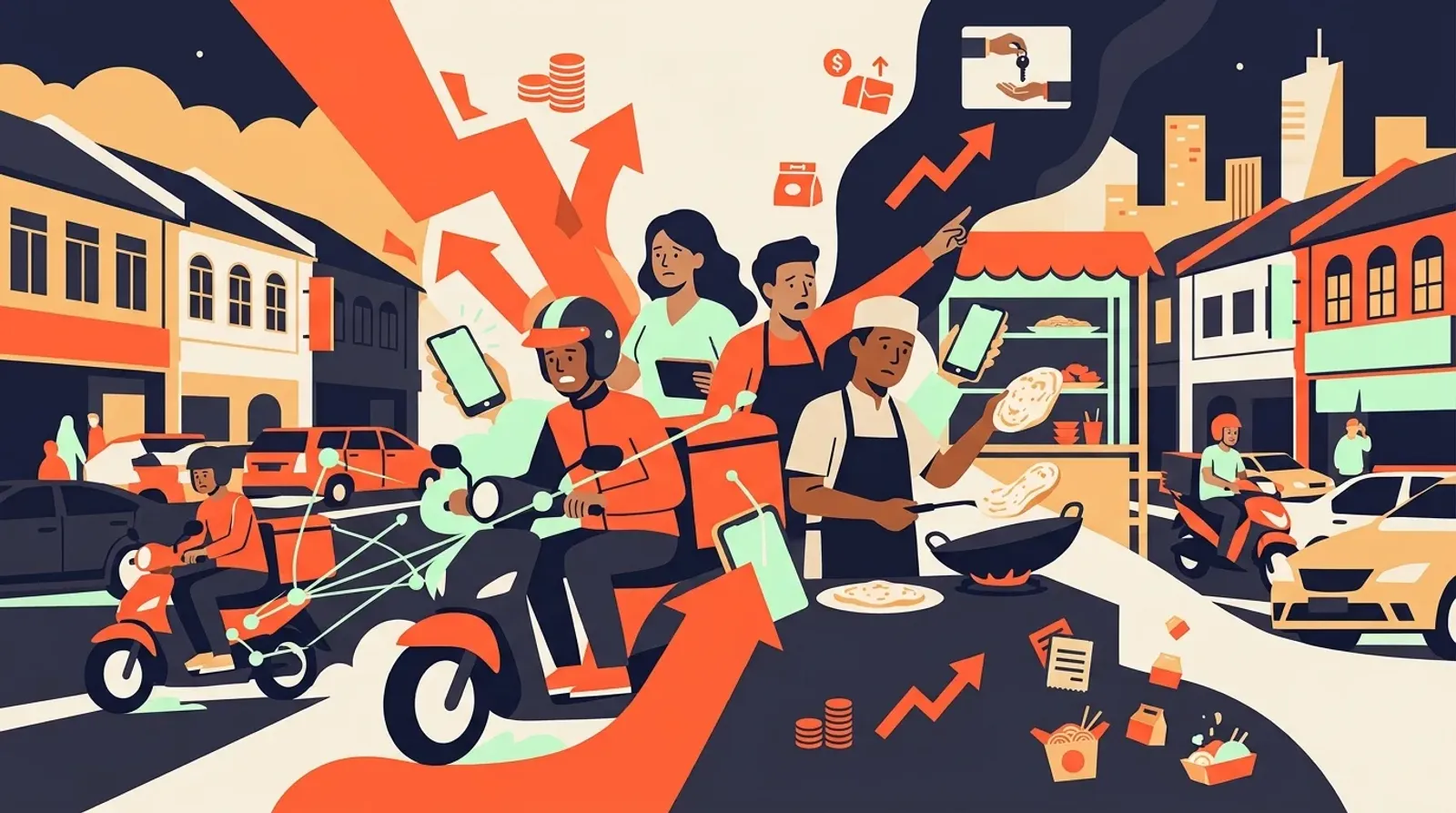
The gig economy is expanding fast, but workers still face delayed pay and opaque cuts. Here is how to make the growth work for you.
The Gig Economy Is Growing. Are Workers Getting More?
The Gig Economy Is Booming — So Why Do Workers Still Feel Squeezed?
The gig economy — short-term, platform-based work arrangements replacing traditional employment — has expanded rapidly across Southeast Asia and globally. More people are doing gig work than ever before. Demand is rising. Platforms are multiplying. On paper, this looks like a win for workers.
But talk to anyone who has actually lived it — picking up shifts, chasing payments, watching a cut disappear before the money even lands — and the picture looks very different.
The gig economy grew. The middlemen grew with it.
The Real Villain Is the System, Not the Sector
The broken staffing model was never built around workers. It was built around intermediaries. Agencies, platforms, and brokers inserted themselves between the person doing the work and the business that needed it done. Every layer added a delay. Every layer took a cut.
Workers already know this firsthand. You finish a shift. Then you wait. Days. Sometimes weeks. For money you already earned. Meanwhile, a significant portion of what the business paid has quietly disappeared into the middle of the chain.
That is not a side effect of growth. That is the system working exactly as it was designed.
Growth Without Fairness Is Just More of the Same
When the sector expands but the structure stays the same, workers do not automatically benefit. They just get more access to the same bad deal — more shifts available, same slow pay, same disposable treatment. The conditions that squeeze workers are structural. Delayed payments are not accidents. Opaque fee cuts are not oversights. They are features of a model that treats workers as inventory, not people.
A Different Standard Is Possible
Emergency staffing infrastructure like FlashJobs was built to cut out the friction that the old system depends on. Workers get same-day pay. Shifts are nearby. There is no waiting for money already earned.
That is not a bonus feature. It is the baseline that the old model should have offered from the start.
The gig economy’s growth is real. But growth only means something to workers when the infrastructure behind it is actually on their side.
Why the Old Staffing System Was Built to Fail Workers
The traditional staffing agency model was not designed around the worker. It was designed around the agency’s cash flow. Understanding that distinction explains almost everything wrong with how shift work has been managed for decades.
You Are a Line Item, Not a Person
Legacy staffing agencies sell labour in bulk. Operators buy prepaid bundles of hours or headcount. Workers get slotted into rosters based on what the agency has sold — not based on who needs income today or who lives closest to the venue.
The result is predictable. A worker registers, completes paperwork, and then waits. Days. Sometimes weeks. Meanwhile, rent is due.
The Payment Float Problem
Traditional agencies collect payment from the operator on 30-day invoice terms. The worker, however, already worked the shift. They are now financing the agency’s accounts receivable with their own unpaid labour.
That gap — between work done and money received — is not an accident. It is baked into the model. The agency holds the float. The worker absorbs the risk.
Markups That Eat the Worker’s Share
Agencies charge operators a significant markup on every hour worked. A portion covers legitimate costs: compliance, insurance, administration. But a large portion simply stays with the intermediary. The worker on the floor, doing the actual job, receives the smallest slice of the value they created.
Manual matching compounds this. A coordinator calls down a list. Someone picks up. That process takes hours or days. By the time a worker gets a confirmed shift, the opportunity cost is already real.
The System Was Never Incentivised to Fix Itself
Agencies profit from volume and float, not from worker outcomes. There was no structural reason to pay faster, match smarter, or treat workers as individuals with financial lives that cannot wait.
Emergency staffing infrastructure like FlashJobs is built on an opposite logic — same-day pay, nearby placement, and a two-hour response window. The intermediary stops being the bottleneck. The worker stops being the last to get paid.
The Types of Gig Work Driving Growth Right Now
When people picture gig work, they picture a driver or a delivery rider. That image is accurate — but incomplete. The growth happening right now is broader, faster, and far less visible to the average observer.
F&B and Hospitality: The Largest Segment Nobody Talks About
Restaurants, cafes, hotels, and event venues run on shift-based labour. Staff call in sick. Events overrun capacity. A kitchen short one prep cook on a Friday night is not a minor inconvenience — it is a service failure in real time.
This segment has some of the highest worker turnover and the most unpredictable demand of any industry. Yet it has historically been the worst served by traditional staffing.
The old system meant calling an agency, waiting hours for a response, and hoping someone showed up. Workers, meanwhile, sat on lists and heard nothing until they were urgently needed — then waited weeks for payment.
- High volume: Hundreds of shifts open and close every single day across F&B venues
- High churn: Worker availability changes constantly; the roster you had last week may not exist this week
- High stakes: A no-show at a full restaurant hits revenue, reputation, and team morale simultaneously
Why This Segment Needs Infrastructure, Not Just an App
This is exactly where emergency staffing infrastructure earns its place. FlashJobs was built for this reality — connecting operators with verified, nearby workers fast enough to actually matter, with same-day pay that gives workers a real reason to show up and stay engaged.
The F&B gig segment is not a niche. It is one of the largest, most active, and most underserved labour markets in Malaysia. The growth is already here. The infrastructure is finally catching up.
What Gig Workers Actually Want (And Rarely Get)
Talk to enough gig workers and the same frustrations surface every time. The promise of flexible work sounds good. The reality — waiting days for pay, travelling far for short shifts, accepting jobs with vague rates — feels like a different deal entirely.
Here is what gig workers consistently say they want, and why the old system keeps falling short.
Pay the Day You Work
Waiting five to fourteen days for wages you earned today is not a minor inconvenience. For workers living shift to shift, it is a real financial pressure. Same-day pay is not a perk — it is a basic expectation that most platforms still fail to meet. FlashJobs pays workers the same day the shift is completed. That single change removes one of the biggest pain points in the entire model.
Work Close to Home
A 90-minute commute each way for a four-hour shift is not a good deal. Fuel, transit fares, and time erode the value of the work before you even clock in. Workers want shifts near where they live. That is a reasonable ask, and it should be the default — not the exception.
Know What You Earn Before You Say Yes
Vague pay descriptions and surprise deductions destroy trust. Workers should see a clear rate before they accept any shift. No fine print. No “it depends.” Transparency at the point of decision is the minimum standard for a fair working arrangement.
These are not ambitious demands. They are the basics. The gig economy grew fast by promising workers more control. Delivering on that promise means fixing pay timing, reducing commutes, and being honest about earnings upfront.
Key Trends Shaping the Gig Economy Through 2035
The gig economy is not slowing down. But it is changing shape — fast. Four trends are already rewriting the rules.
Worker Reclassification Is Forcing a Reckoning
The European Union’s Platform Work Directive, passed in 2024, creates a legal presumption that platform workers are employees unless a platform can prove otherwise. That single policy shift is sending a signal globally: governments are no longer willing to let classification ambiguity sit unresolved. For workers, this means stronger protections are coming. The middlemen who built their business on that gap are the ones most exposed.
Instant Pay Is No Longer a Perk — It Is an Expectation
Across every gig category, workers are demanding same-day or on-demand pay. Platforms and staffing systems that still batch payments weekly are fighting against the current. Same-day pay is quickly becoming the baseline, not the bonus.
F&B and Hospitality Are Restructuring Around Flexible Headcount
Permanent headcount is expensive and rigid. Operators in food and beverage and hospitality are actively restructuring their workforce models — keeping a lean core team and filling variable demand through flexible, on-call workers. This is not a temporary workaround. It is a deliberate strategic shift.
Technology Is Cutting Out the Middleman
Smarter matching technology means the gap between “we need someone now” and “someone shows up” is collapsing. When an operator on FlashJobs can fill a no-show in around 90 minutes, the traditional staffing agency — with its phone calls, markups, and 48-hour lead times — loses its reason to exist. The intermediary only survives when the system is slow. Speed kills the middleman.
These four trends point in the same direction: workers and operators who adapt early will win. Those who wait for the old system to fix itself will keep losing. You can read more about how regulation is reshaping worker protections in this space.
How to Make the Gig Economy Work for You, Not Against You
The gig economy is growing. But growth does not automatically mean better conditions for you. The same broken middleman system that held workers back still exists on most platforms. The difference now is that you have more options — if you know what to look for.
Get Paid the Day You Work
Waiting weeks for a payout is not a feature. It is a power move by platforms that benefit from holding your money. Before you sign up anywhere, ask one question: when does the money land? If the answer is anything other than same-day or next-day, factor that delay into your real cost of working.
Protect Your Effective Hourly Rate
A shift that pays well on paper can pay badly in practice. Travel time and transport costs eat into your earnings before you even start. Always calculate: pay minus travel cost, divided by total hours including commute. That is your real hourly rate. Prioritise nearby work, and your effective earnings go up without a single extra hour worked.
Know What the Platform Takes
Platforms are not charities. They take a cut. The problem is that many bury this figure or make it difficult to compare. Ask directly, or check the terms before you accept a shift. A smaller cut means more of the rate reaches you — and that compounds across every shift you work.
Manage Your Tax Obligations
Whether you pick up shifts as your main income or treat this as freelance work alongside other earnings, you are operating as an independent contractor. That means no one withholds tax on your behalf — track your income and set aside what you owe before it becomes a problem.
Use Infrastructure Built for Workers
There is a difference between a platform that treats you as a disposable resource and one built around your ability to show up, earn, and move on with dignity.
FlashJobs is emergency staffing infrastructure for Malaysia’s food and beverage and service industries. Operators post urgent shifts when staff do not show. You pick up nearby work fast. You get paid the same day. No waiting. No middleman skimming your time.
If you are done with platforms that make you wait and platforms that make you beg, start at flashjobsapp.com and work on your terms.
Looking for paid shifts near you? FlashJobs matches you to nearby F&B and retail shifts — direct wage pay, zero platform fees. Register early.