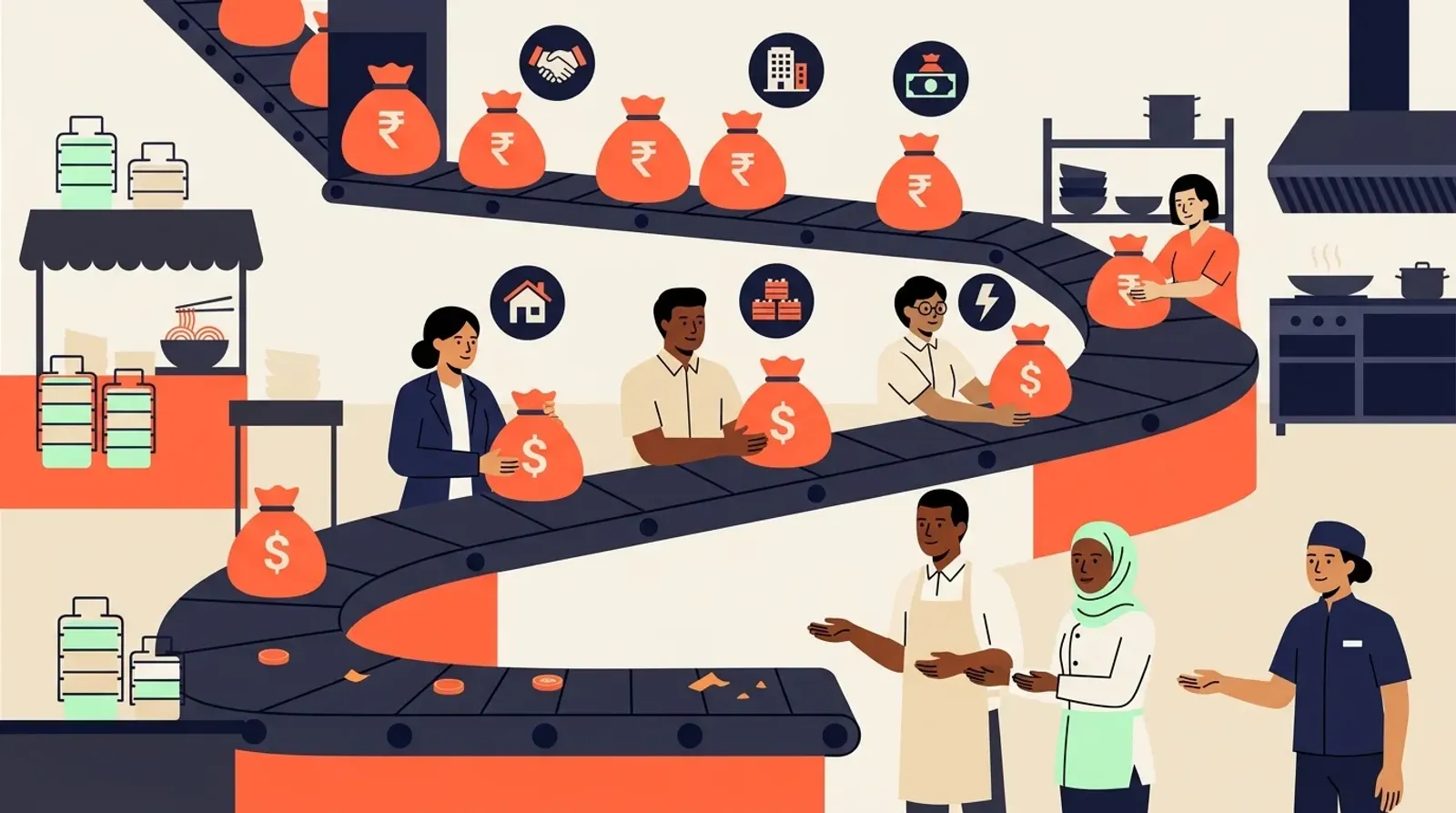
Discover how the gig economy's broken pay system affects workers — and what fair on-demand staffing infrastructure looks like.
Gig Work Pays You Last: The Real Economic Impact
The System Was Built to Pay You Last
You showed up. You worked the shift. You did everything asked of you. Then you waited — three days, a week, sometimes longer — depending on how many middlemen sat between your labour and your bank account.
That wait is not an accident. It is a design choice made for someone else’s benefit, not yours.
The platform collects its cut first. The agency takes its margin next. Payment processing adds its delay on top. By the time money moves toward the person who actually did the work, it has already been trimmed, held, and timed to suit everyone upstream.
The economic impact of gig work on individual workers is not just about hourly rates. It is about when money arrives, how much survives the platform’s fees, and whether the system treats your time as valuable. Those three things shape whether gig income builds financial stability — or creates a different kind of precarity.
Some platforms are starting to close the gap. FlashJobs was built specifically so F&B workers receive same-day pay — because the shift you finish today should not fund someone else’s cash flow until next Tuesday.
What the Gig Economy’s Economic Impact Actually Means for Workers
When economists talk about the gig economy’s economic impact, they measure output, platform revenue, and aggregate spending. Those figures capture value at the top of the system. They do not capture how unevenly that value is distributed — or how much never reaches the worker who created it.
Primary Income vs. Side Income — The Difference Is Everything
Not all gig workers are in the same position:
- Supplementary earners use on-demand work to top up a stable salary. A delayed payment is an inconvenience.
- Primary earners depend on shift work for rent, food, and bills. The same delay is a crisis.
Macro growth figures average everything together — and that average hides the workers most exposed.
If you work shifts in F&B, the economic reality is immediate: you need to know what you will earn, and you need to get paid the same day. Emergency staffing infrastructure like FlashJobs is built around same-day pay precisely because that gap between work completed and money received is where the old system extracts the most from workers who can least afford it.
How the Gig Economy Reshapes the Labor Market — For Better and Worse
The Genuine Upside
For workers who can set their own terms, independent work delivers real autonomy. A parent managing school hours, a student covering rent, a professional testing a new industry — short-term engagements give these workers time sovereignty that a fixed contract cannot. Businesses gain agility too, scaling labour to actual demand.
The Structural Trade-Off
Flexibility has a price, and low-wage workers pay most of it. Short-term work arrangements typically exclude paid leave, medical coverage, and EPF contributions. Income becomes unpredictable, and that instability compounds — workers who cannot forecast next month’s earnings spend less, save less, and absorb financial shocks badly.
A Tale of Two Labor Markets
Work in the gig economy is not one experience. It is two.
High-skill freelancers — designers, developers, consultants — use these arrangements as leverage. They command project rates and choose clients. The platform serves them.
Low-wage shift workers face the opposite dynamic. They compete for available hours, absorb last-minute cancellations without compensation, and wait days for payment. The broken middleman system extracts the most from the workers who can least afford it.
The difference between these two experiences is not skill alone. It is whether the system is built to serve the worker or extract from them. That is the structural problem FlashJobs was built to solve. See how it works at flashjobsapp.com.
The Hidden Tax: Wage Cuts, Payment Delays, and Platform Skimming
The broken middleman system does not just inconvenience workers. It extracts from them — quietly, structurally, and at scale.
Three Layers of Extraction
Platform skimming. Intermediaries routinely take a significant slice of what operators actually pay before any money reaches the worker. Industry practitioners commonly cite figures in the 20–40% range. You do not see it on a receipt. You just see a lower rate than the shift was worth.
Payment delays. Weekly pay cycles are common. Bi-weekly is standard on many digital platforms. Thirty-day settlement terms exist. The platform holds your earned wages and uses that float while you cover rent, transport, and meals in the meantime.
Classification as a cost-cutting tool. When workers are classified as independent contractors rather than employees, platforms avoid paying statutory benefits, EPF contributions, and other protections. In 2021, the UK Supreme Court ruled that Uber drivers qualified as “workers” under UK employment law — a category carrying minimum wage guarantees and holiday pay entitlements. The ruling confirmed that classification had been used strategically to limit liability, not to reflect how work actually operated.
Stack these three layers together and you have a structural disadvantage designed into the system itself. The broken middleman model was never built to serve workers.
Same-day pay is one concrete way to dismantle that float. FlashJobs operates on exactly that principle — workers receive same-day payment, removing the delay that turns earned wages into someone else’s working capital. Visit flashjobsapp.com to see how it works.
Worker Rights and Legal Shifts Changing the Gig Economy
The law is finally catching up with the gig economy — and that matters.
The February 2021 UK Supreme Court ruling on Uber drivers unlocked real protections: minimum wage entitlement, paid holiday, and pension contributions. It sent a clear signal to regulators worldwide that the old classification system was no longer defensible. Since then, the European Union has moved toward a legal presumption of employment for platform workers, and governments across Southeast Asia are reviewing how labour law applies to app-based work.
What Legal Wins Actually Deliver
For F&B and service workers, reclassification can mean minimum wage protection, holiday pay, and formal dispute mechanisms when a platform withholds or delays pay. These are not small things — they represent structural recognition that gig workers are not disposable. A broader workforce that understands its legal rights is harder to exploit.
The Gap the Law Cannot Close
Legal protection and fast payment are two different problems. A court ruling can establish your right to minimum wage. It cannot make the money arrive in your account tonight. Most legal frameworks address how much you are owed, not how quickly you receive it. Payment cycles remain a platform design choice, not a regulated standard in most markets.
Platforms built around same-day pay — like FlashJobs — treat fast payment as an operational commitment, not a future legal requirement. Know your legal protections. Then choose infrastructure that goes further.
The F&B Worker’s Reality: Shifts, No-Shows, and Getting Paid
Here is a scenario that plays out constantly. A worker accepts a shift across town, commutes 45 minutes each way, works a full service, then waits. The pay arrives days later. By the time the transfer lands, transport costs and time have already taken a bite. The real hourly rate is nowhere near what the listing showed.
Then there are no-shows — not from workers, but from operators who cancel at short notice. A confirmed shift disappears the morning of. No shift means no pay. The worker has already rearranged their day.
FlashJobs operates as on-demand emergency staffing infrastructure for F&B businesses. Operators fill a no-show in around 90 minutes, and workers get same-day pay for every shift completed. Work is also matched nearby — less commute means lower transport costs, which means the rate you see is closer to the rate you keep.
The enemy here is not a specific employer. It is a broken system that treats payment delay as normal and worker time as disposable. If you work in F&B and you are tired of finishing a shift and then waiting to be paid, explore what emergency staffing infrastructure looks like at flashjobsapp.com.
Flexibility vs. Stability: Can Gig Workers Have Both?
The standard pitch for work in the gig economy: you can have freedom, or you can have security. Pick one. That is not a real choice. It is a design flaw dressed up as a feature.
Most platforms hand you a schedule and take away your certainty. You choose your hours, yes — but you wait days to see your money, and you accept shifts not knowing if the payout will cover your costs. The flexibility is real. The financial ground beneath it is not.
Compared to traditional employment, where a fixed contract at least guarantees a predictable pay date, this kind of work can leave you making decisions based on when you might get paid rather than what you actually want to work. When you finish a shift and the money arrives the same day, the economics of flexible work change completely. You can cover transport. You can take another shift tomorrow without carrying yesterday’s uncertainty.
Real infrastructure means shifts close to where you already are, payment that lands the same day without chasing anyone, and a system that respects your time as the asset it is. This is the model FlashJobs is built around — operators post urgent shifts to cover a no-show, workers nearby fill them fast, and the shift pays the same day.
Flexibility and stability are not opposites. They only feel that way when the infrastructure underneath you is broken.
What a Healthier Gig Economy Looks Like — and How to Find It
A healthier gig economy flips the broken middleman equation. The worker’s outcome comes first — not last.
The Four Markers of a Fair Setup
- Transparent pay. You see the rate before you accept. No surprises after the shift.
- Fast payment. Same-day pay is not a bonus feature. It is the baseline.
- Nearby work. Commuting an hour for a four-hour shift destroys your effective hourly rate. Distance is a hidden wage cut.
- No hidden cuts. Fees and deductions should be visible upfront — not buried in fine print.
If any of these four are missing, the arrangement is built around someone else’s margin, not your income.
Questions to Ask Before You Accept
- When exactly will I be paid?
- What is the full take-home rate after all fees?
- How far is the work from where I am?
- Who do I contact if something goes wrong on shift?
If the answers are vague, that is your answer.
FlashJobs is built as emergency staffing infrastructure for F&B and business operations in Malaysia. Workers get same-day pay and nearby shift matches. Operators fill a no-show in around 90 minutes. The model is designed so the worker’s outcome and the operator’s outcome are aligned — the middleman’s margin is not the point.
That is what a healthier gig economy looks like. It exists. You just have to know what to look for — and what to walk away from.
Looking for paid shifts near you? FlashJobs matches you to nearby F&B and retail shifts — direct wage pay, zero platform fees. Register early.