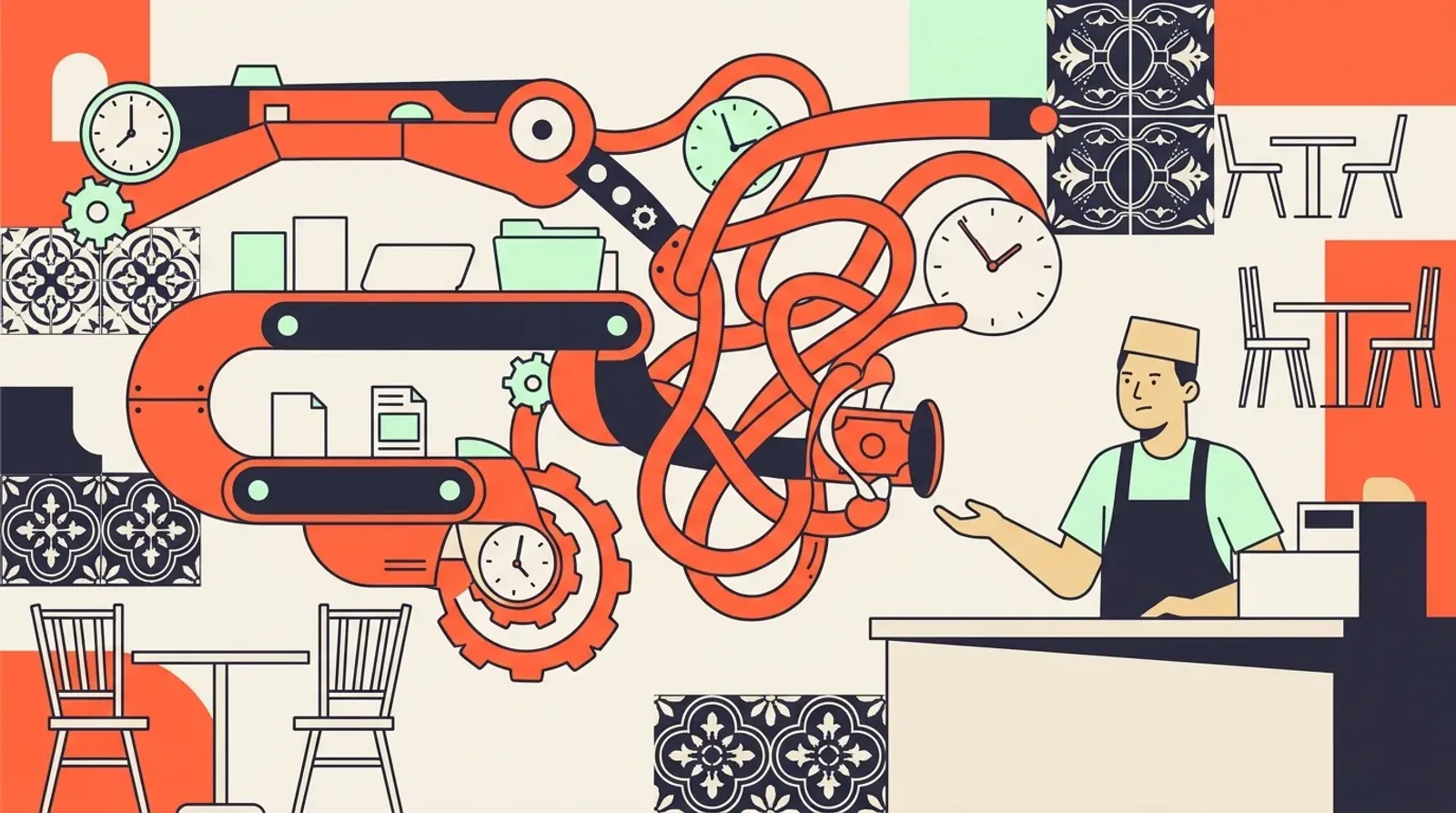
The gig system skims your pay and makes you wait. Here's how to find your first gig job fast — and get paid the same day you work.
Tired of Waiting to Get Paid? Find Your First Gig Job
The System Was Built to Make You Wait — Not to Pay You
You finish a shift. You did the work. You showed up on time, stayed until the end, and gave it everything.
Then you wait.
Three days. Five days. Sometimes two weeks. The money sits somewhere between the business that hired you and the platform that placed you — and nobody can give you a straight answer about when it arrives.
This is not an accident. The traditional staffing middleman was never designed around your needs. It was designed around its own cash flow. Platforms collect from operators quickly, then hold your earnings as long as the system allows. Meanwhile, you are covering your own transport, your own meals, your own bills — on your own timeline.
The Hidden Cost Nobody Talks About
Delayed pay is the obvious problem. But there is a quieter one sitting underneath it.
Platform fees quietly skim a significant portion of what operators actually pay for your work. The rules around deductions are buried in terms most people never read. You do not always know what you earned until the money finally lands — and by then, questioning it feels pointless.
The middleman profits from the gap between what you earn and what you receive. You absorb the risk. The platform absorbs the margin.
Why Choosing the Right Platform Matters Before Shift One
Most workers only discover a platform’s pay structure after they have already done the work. That is too late.
Before you take your first gig, you need to know:
- When will you actually be paid? Same day, next day, or next week?
- What fees apply? Is the rate you see the rate you keep?
- Who do you contact if something goes wrong? Is there a real process, or just a help page?
These are not small details. They determine whether gig work actually works for you.
The broken middleman system counts on you not asking these questions until after you have already committed. You can choose differently — starting right now, before you ever book a shift.
FlashJobs was built on a simple belief: the person who does the work should be paid the day they do it. That principle shapes everything about how the platform operates, from flashjobsapp.com to the moment money hits your account.
You are the hero of this story. Pick your tools accordingly.
What ‘Gig Work’ Actually Means in 2026
The word “gig” gets used for everything from designing logos to washing dishes. That vagueness costs first-timers time and money. Before you commit to anything, know exactly what type of gig work you are looking at — because the type determines how fast you get paid, how protected you are, and how easy it is to start.
A Plain Definition
Gig work is short-term, flexible, task-based work. You are hired for a specific task or shift, not a permanent role. When the task ends, so does the engagement. Simple.
The Main Types
Not all gig work is equal. Here is how the landscape actually breaks down:
- Freelance creative work — writing, design, video editing. You pitch, you wait for approval, you invoice, then you wait again. Payment cycles of 14 to 30 days are common.
- Remote task work — data entry, surveys, virtual assistance. Low barrier to entry, but earnings are often low and inconsistent.
- Delivery and ride-hailing — high volume, earnings tied to distance and demand. Income can fluctuate sharply day to day.
- Shift-based physical work — F&B, events, retail, hospitality. You show up, you work a defined shift, the job is done.
Why the Distinction Matters
Each type carries a different pay timeline and a different level of protection. Freelance creative work can leave you chasing invoices for weeks. Delivery work depends on algorithms you cannot see or control. The broken middleman system — opaque rules, delayed payouts, no clear escalation path — hits hardest in categories where the worker has the least leverage.
Shift-based work is different. The task is concrete, the hours are fixed, and the value you deliver is immediately visible.
The Fastest Entry Point for Most First-Timers
If you want to start earning quickly and build a track record, shift-based gig work is the most direct path. The skills required are practical, the shifts are short, and the feedback is immediate. Platforms built specifically for shift-based work — like FlashJobs — are designed around this reality, connecting workers to nearby shifts and paying out the same day the shift is completed.
Know what you are signing up for. The right category makes your first gig a stepping stone, not a frustration.
Know What You Are Signing Up For Before You Start
Most people jump into gig work and figure out the rules after they have already accepted a shift. That is how the broken system wins. A little homework before your first gig saves you from nasty surprises on payday.
Is Gig Work Actually Available in Your Field?
Not every industry runs on flexible staffing. Some roles have consistent short-notice demand; others are almost entirely full-time. F&B, events, hospitality, and retail consistently need extra hands at short notice — a no-show at a restaurant on a Friday night creates an immediate gap that must be filled fast. If you are targeting one of these industries, flexible work is genuinely available year-round, not just as a last resort.
Seasonal Peaks vs. Year-Round Demand
Demand is not flat. F&B surges around public holidays and major sporting events. Retail spikes during year-end sales. Events cluster on weekends. Understanding this rhythm helps you plan your availability rather than wondering why your calendar goes quiet mid-month. Year-round industries like F&B and hotel operations tend to offer the most consistent opportunities for new workers building a track record.
Check the Pay Schedule Before You Accept Anything
This is the detail most first-timers skip — and it costs them. Ask one simple question before you commit to any platform or gig: when exactly do I get paid?
Common structures you will encounter:
- Daily pay — you receive your earnings the same day you work
- Weekly pay — funds arrive at the end of a seven-day cycle
- 30-day float — common on older platforms; your money sits with them for a month
A 30-day float is not a pay schedule. It is a cash-flow problem dressed up as policy. Know the difference before you sign up.
Read the Fee Structure — Know What You Actually Keep
Some platforms charge registration fees, equipment deposits, or take a percentage cut before your earnings reach you. Read the terms before you accept a shift, not after. The number on the listing is rarely the number in your account.
On FlashJobs, workers get same-day pay for F&B and hospitality shifts — no waiting, no 30-day float. You can check what is available at flashjobsapp.com.
Going in informed means the broken system does not get to surprise you.
How to Find Your First Gig Job: A Step-by-Step Approach
The broken system wants you scattered — signing up on five platforms, waiting for one of them to call, and never building real momentum anywhere. Do the opposite. Start focused, move fast, and let your track record do the work.
Step 1: Pick One Category and One Platform
Choose the type of work you can do today — food and beverage service, kitchen support, retail, events. Then pick one platform that matches it and commit. Spreading across multiple platforms at the start means you build a shallow reputation everywhere and a strong one nowhere. Depth beats breadth when you are starting from zero.
Step 2: Complete Your Profile Fully
Your profile is your first impression, and it works two ways: an algorithm decides whether to surface you, and a real operator decides whether to trust you. Upload a clear photo. Fill in every field. List any relevant experience honestly, even if it is informal. A half-empty profile signals a half-committed worker — operators move on quickly when they are filling a shift under pressure.
Step 3: Apply to Nearby Opportunities First
Distance is a practical filter. When you apply to work close to where you are, you reduce the risk of being late, you lower your own costs, and you signal to operators that you are genuinely available. For emergency shifts especially — the kind that need someone in the door fast — nearby workers get the call first. On FlashJobs, operators filling a no-show can have someone placed in around 90 minutes, so proximity is not just convenient, it is competitive.
Step 4: Show Up, Do the Work Well, Collect Reviews
This is the step most first-timers underestimate. Every shift is a compounding asset. One good review leads to a repeat booking. A repeat booking leads to a stronger profile. A stronger profile means you get surfaced for better opportunities faster. The workers who build the best track records are not necessarily the most experienced — they are the most consistent.
Turn up on time. Do what you said you would do. Be easy to work with.
That is the entire strategy. It sounds simple because it is. The broken system made it feel complicated. It is not.
The Pay Problem: Why Your First Gig Might Not Pay You Fast
You worked a full shift. You did everything right. Then you check the app — and your money is sitting in a queue, locked behind a 7 to 30-day holding period.
This is not an accident. It is how the broken middleman system was designed.
Why Platforms Hold Your Money
Most gig platforms batch payments on weekly or bi-weekly cycles. Some hold earnings longer while they process fees, verify hours, or run internal checks. For a first-timer who took the gig because they needed income now, that wait is not a minor inconvenience — it is a real cash-flow problem.
Meanwhile, the platform takes its cut before you ever see a cent. Service fees, processing charges, and platform commissions quietly reduce your take-home pay. You accepted one rate. You receive another.
The First-Timer Trap
The cash-flow gap hits hardest when you are just starting out. You have not built up a buffer yet. You may have spent money getting to the job — transport, a uniform, a meal. You worked in good faith. But the system treats your time as a float it can hold onto for its own convenience.
That is the villain here: not any single company, but a payment structure that was never built around workers’ actual lives.
What Same-Day Pay Changes
When the infrastructure is built differently — where pay is processed the day you work — the entire equation shifts. You are not chasing money you already earned. You are not rationing your week around a payment date you cannot control.
This is the operational logic behind FlashJobs. Workers get same-day pay for every shift completed through the platform. No waiting cycles. No holding periods. You show up, you work, you get paid.
That is not a perk. It is the baseline that gig work should have offered from the start.
What to Check Before You Accept Any Gig
- When exactly does payment land? Get a specific answer, not a range.
- What fees are deducted? Understand your real take-home before you commit.
- Is there a minimum payout threshold? Some platforms hold earnings until you hit a minimum balance.
The broken system counts on you not asking these questions. Ask them anyway.
How FlashJobs Gets You Paid the Day You Work
The broken staffing system runs on one rule: make the worker wait. Wait for approval. Wait for payroll cycles. Wait for someone to answer your message. By the time the money arrives, you have already covered the cost of working — transport, food, time — out of your own pocket.
FlashJobs was built to break that rule.
Same-Day Pay, No Exceptions
When you complete a shift through FlashJobs, you get paid that day. Not at the end of the week. Not on the 15th of next month. The day you work.
This is not a bonus feature. It is the foundation the whole system is built on. You show up, you do the work, you get paid. That is how it should have always worked.
Shifts Near You
Long commutes do not just drain your energy — they drain your earnings before you have even started. FlashJobs connects you to F&B shifts close to where you are. Less time on the road means more of your pay stays in your pocket, and more energy left to actually do the job well.
You Control Your Schedule
Most staffing systems hand you a roster and expect you to fit around it. FlashJobs works the other way. You see available shifts and you choose the ones that fit your life. Early morning, weekend, mid-week — you decide what works for you.
This matters most when you are just starting out. You do not have to commit to a rigid schedule while you figure out how gig work fits into your routine.
Built for F&B, Built for Speed
FlashJobs operates as emergency staffing infrastructure — the system operators call when a shift needs filling fast. That urgency works in your favour. Shifts are real, they are immediate, and the entire process is designed to move quickly from sign-up to shift to payment.
There is no middleman holding your money. No opaque rules about when you qualify to withdraw. No waiting game.
Ready to work today and get paid today? Visit flashjobsapp.com to see what shifts are available near you right now.
Building a Reputation That Gets You More Gigs
The broken system told you that getting work was about luck — being in the right place at the right time, knowing someone, or refreshing an app fast enough. That is not true. Once you are inside any gig platform, your reputation becomes the real engine. Build it well from your very first shift, and the work starts coming to you.
Reliability Is Your Most Valuable Asset
Operators and coordinators remember who showed up and who did not. As a first-timer, you have no track record yet — and that is fine. What you do have is the ability to be completely reliable right from day one. That alone puts you ahead of a significant portion of the available pool.
Treat every first gig as an audition for the next ten. One clean, professional shift creates a reference point. A no-show or a late arrival creates a different kind of reference point — one that follows you.
How Ratings and Reviews Work
Most platforms use a rating system after each completed shift. Operators rate your punctuality, attitude, and work quality. Those scores are visible to future operators before they confirm you for a role.
Early ratings carry extra weight because you have fewer of them. A single strong review in your first week shapes how you look for the next month. A weak one is harder to recover from when your profile is still thin.
Protect your early ratings like they are cash.
Practical Habits That Set You Apart
These are not complicated. They are just consistent:
- Confirm the shift as soon as you accept it. A quick acknowledgement signals professionalism before you even arrive.
- Arrive five minutes early. Not on time — early. Kitchens and event floors move fast, and a late arrival creates chaos for the whole team.
- Come prepared. Know the dress code, bring what you were asked to bring, and have your phone charged.
- Communicate clearly. If something changes — you are running late, you have a question — say so immediately. Silence is the fastest way to lose trust.
On FlashJobs, operators filling an emergency shift through the platform’s two-hour SLA need someone dependable right now. Workers who consistently deliver that reliability get noticed. That is how a first gig turns into a regular call.
Your reputation costs nothing to build. It just takes showing up and doing what you said you would.
Protecting Yourself: Rights, Safety, and Red Flags
The broken system does not always announce itself. Sometimes it looks like a legitimate opportunity — until your first payday reveals hidden deductions, unclear terms, or a pay timeline that stretches weeks longer than you expected.
Knowing the warning signs before you accept your first shift is the smartest move you can make.
Red Flags to Watch Before You Commit
Not every platform or operator plays fair. Walk away — or ask hard questions — if you see any of these:
- No clear pay timeline. If the platform cannot tell you exactly when you will be paid, assume it will be late.
- No written confirmation of your rate. A verbal promise is not a contract. If your agreed rate is not in writing before you start, you have no ground to stand on if it changes.
- Vague cancellation terms. What happens if the shift is cancelled last minute? What happens if you need to cancel? Legitimate platforms answer this clearly, upfront.
- Unexplained deductions. Every fee or deduction should be disclosed before you accept — not subtracted silently from your payout.
Your Right to Know What You Earn
Before you accept any shift, you are entitled to know the exact rate, the expected hours, and how and when payment will be made. This is not a negotiation. It is basic transparency, and any platform that withholds it is not working in your interest.
FlashJobs shows you the rate before you confirm a shift. No surprises. Same-day pay means you are not waiting and wondering — the money arrives the day you work.
Keep Your Own Records
Even on a trustworthy platform, protect yourself by keeping personal records:
- Note the date, location, hours worked, and agreed rate for every shift.
- Screenshot or save any written confirmation you receive.
- Record every payment received and cross-check it against what was promised.
If a dispute ever arises, your own records are your strongest evidence. Do not rely on the platform’s history alone.
The Simplest Test of a Legitimate Platform
Ask one question: Will I know exactly what I earn before I accept, and will I be paid on the day I work?
If the answer is yes — and it is backed by clear terms — you are in a system that respects your time. If the answer is unclear, you already have your answer.
Your First Gig Is One Decision Away
The broken system has one real advantage over you: it counts on you not knowing your options. It counts on you accepting slow pay, vague rules, and platforms that treat you as a number. That ends here.
You now know what to look for.
What You Have Learned
- Pick the right type of gig. Match the work to your skills, your availability, and your location. F&B and hospitality shifts are among the fastest to access and the most consistently available.
- Choose a platform that pays you fairly and fast. Same-day pay is not a bonus feature — it is the baseline you deserve for a day’s work.
- Show up and build your record. Reliability is your professional currency. Every completed shift adds to a reputation that opens more doors.
The Only Variable Left Is You
No guide can take the first shift for you. But the path is clear: find nearby work, show up ready, get paid the same day, repeat.
That is not a complicated system. It is what work should have looked like all along.
FlashJobs is built on exactly that principle. Operators post emergency shifts when their team falls short. Workers pick up nearby work fast. Pay arrives the same day you work — no waiting, no chasing, no middleman taking a cut between you and your earnings.
Your work. Your money. Your schedule.
Take the First Step
If you are ready to stop waiting and start earning, the next move is straightforward.
Visit flashjobsapp.com to find your first nearby shift and get paid the same day you work.
One decision. One shift. That is how it starts.
Looking for paid shifts near you? FlashJobs matches you to nearby F&B and retail shifts — direct wage pay, zero platform fees. Register early.